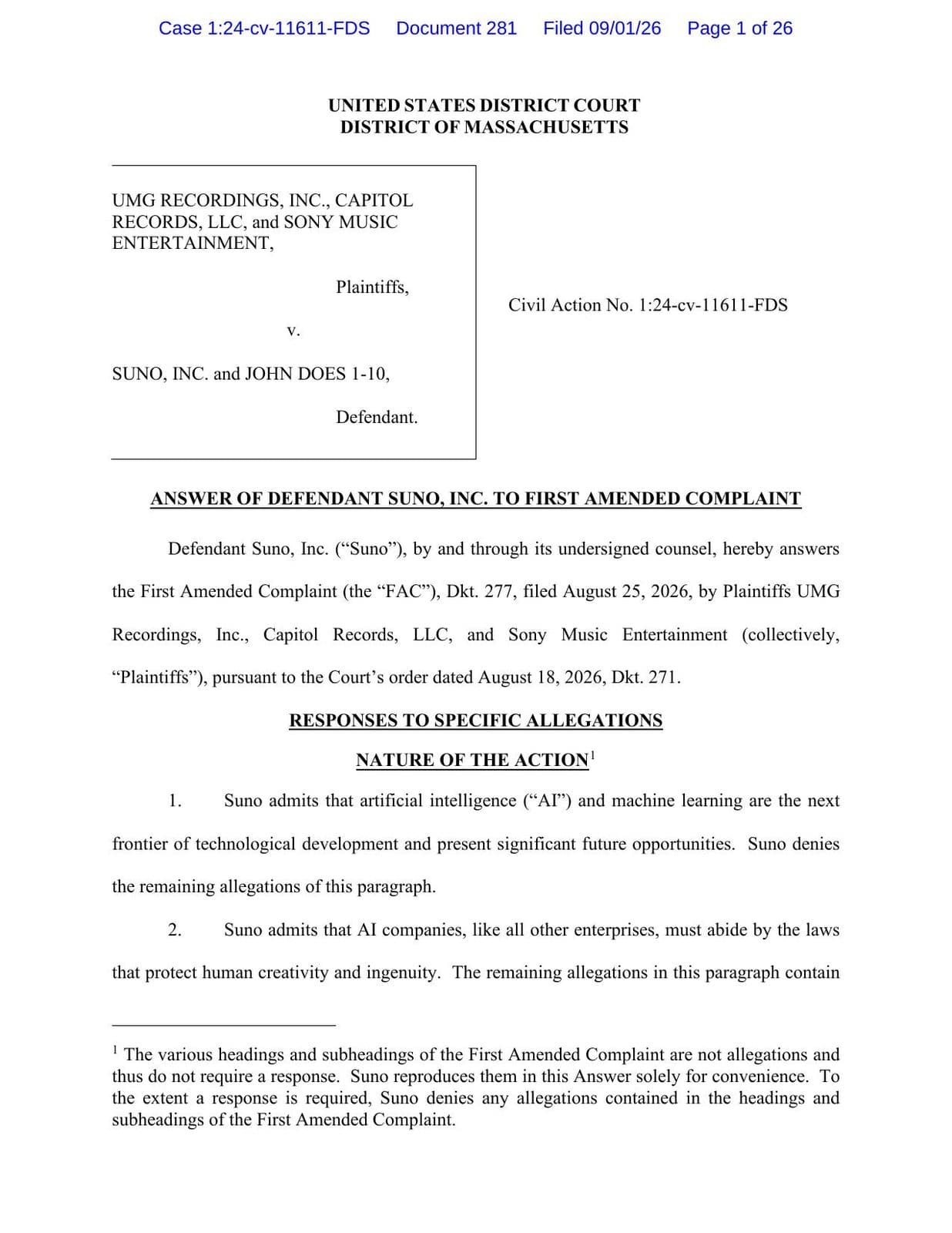
Suno filed its answer to the record labels' first amended complaint in the District of Massachusetts on 1 September, in UMG Recordings, Capitol Records and Sony Music Entertainment v. Suno, 1:24-cv-11611-FDS, Doc. 281. It runs 26 pages and pleads thirteen numbered affirmative defences plus a reservation.
The headline defence
The first is fair use, argued on the theory that “Suno's AI tool uses a back-end technological process, invisible to the public, in the service of creating an ultimately non-infringing new product… This is quintessential fair use.” That sentence is what the coverage quotes, and it is the least surprising thing in the document.
What the common framing gets wrong
The live move is the second defence: copyright misuse and unclean hands. Suno pleads on information and belief that the plaintiffs “have engaged in anticompetitive activities that extend an unlawful monopoly over the production and commercialization of music” and satisfy every prong of the misuse test, including a violation of the antitrust laws. Misuse is not a denial of infringement. It asks the court to hold the plaintiffs' copyrights unenforceable for the period of the misuse — a remedy that applies even where the defendant was not itself injured by it. That converts a copyright case into an antitrust fight over the recorded-music market, against the same three companies now negotiating AI licensing deals.
The defences nobody is counting
Others are quieter and more surgical. Express or implied licence; public domain; de minimis copying; invalid registrations under §§ 411–412; and an innocent-infringement defence that, if it landed, would cut statutory damages to as low as $200 per work under § 504(c)(2). Two further defences — the twelfth and thirteenth — attack standing, and they are aimed only at the § 1201 anti-circumvention claims: that one or more plaintiffs lack Article III standing, and that they are not “person[s] injured” within the meaning of § 1203(a). Suno expressly does not contest subject-matter jurisdiction otherwise.
What a pleading is and is not
None of this has been tested. An affirmative defence is an assertion the defendant must eventually prove, not a finding, and the answer was due under the court's order of 18 August. Counsel is Latham & Watkins, with Sarang V. Damle — until recently the General Counsel of the U.S. Copyright Office — signing for Suno against the majors.