Taiwan's Ministry of Economic Affairs approved US$61.26bn of outbound investment in the first seven months of 2026 across 395 applications, up 208.43% on a year earlier. The figure is being read as evidence that Taiwan's chip industry is relocating to the United States. The composition says something more complicated.
Where the money was approved to go
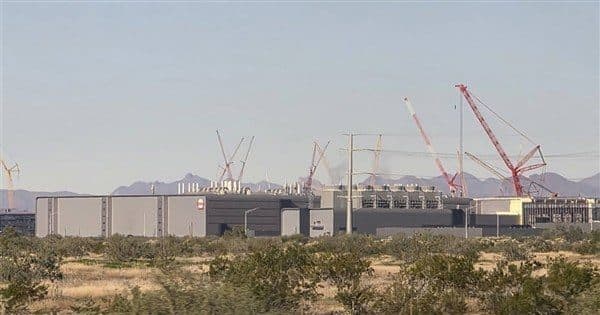
The largest single item is TSMC's US$30bn investment in TSMC Global Ltd, incorporated in the Cayman Islands. Separately TSMC received approval for a US$20bn capital increase in TSMC Arizona. Nanya Technology raised investment in its own Cayman-incorporated subsidiary by US$1bn, and Lite-On Technology will inject US$919m into its US unit.
What the common framing gets wrong
Of roughly US$50bn approved for TSMC, the larger half went to a Cayman Islands entity, not to American fab capacity. Only the US$20bn Arizona line is capacity in the United States. More fundamentally, approved investment is a permit to remit capital — it is not capex spent, not construction started, not wafer starts, and not the same as the capital expenditure TSMC reports to shareholders. Treating an approval statistic as a construction statistic overstates both the speed and the destination of the shift.
The flow runs both ways
Foreign direct investment into Taiwan rose 78.13% to US$13.92bn over the same seven months, and the single largest inbound investor was Micron Semiconductor Asia, at US$7.45bn. A narrative of memory and logic capacity leaving Taiwan has to account for an American memory maker putting more than seven billion dollars in. By origin, Singapore accounts for US$8.66bn or 62.23% of inbound FDI — which is holding-company routing rather than Singaporean industry, the same structural artefact that puts TSMC's largest outbound line in the Caribbean.
The cross-strait channel has effectively closed
The quietest number in the release is the starkest. Taiwanese investment approved for mainland China fell 25.87% to US$572m. Chinese investment into Taiwan came to US$4.07m across twelve applications — down 95.97% year on year. In a year when Taiwan approved sixty-one billion dollars of outbound capital, four million of it moved in the other direction across the strait.