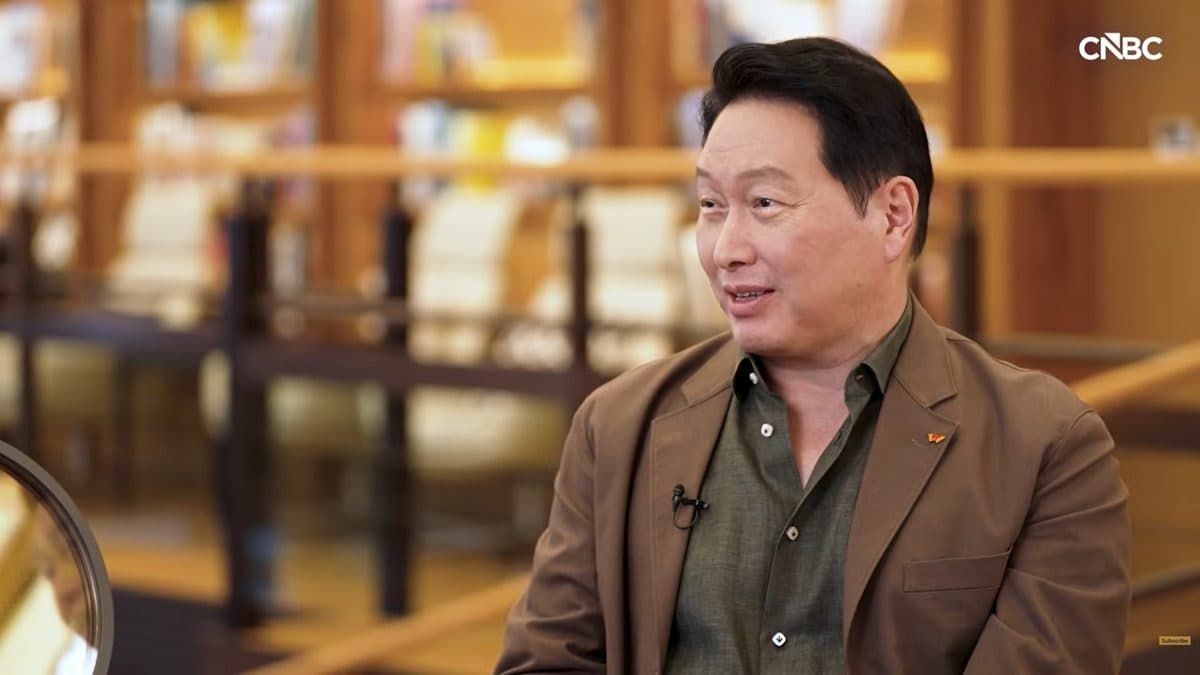
Chey Tae-won, chairman of SK Group, used a CNBC interview released on 13 August to say for the first time that SK hynix is willing to build front-end memory fabs in the United States.
The quote and the obstacle
"I'm willing to do it, but finding the right place is really difficult," Chey said. He put the arithmetic plainly: "the cost of building one fab in Korea is about half of what it is in the United States," citing land, power, water and regulation. That gap is the reason front-end memory manufacturing has stayed in Korea while packaging moved abroad.
The demand signal
Chey said customers are asking for close to double their previous volumes, and that 2027 will be the toughest year for supply and demand — not this year. SK hynix aims to expand total memory output roughly fivefold within ten years, which is a statement about a decade of shortage rather than a cycle.
What is already committed
SK hynix is spending $3.87bn on an advanced packaging plant in West Lafayette, Indiana. Packaging is where HBM stacks are assembled and tested; front-end wafer fabrication remains in Korea. A US front-end fab would be a different order of commitment.
The customer relationship
Chey named Nvidia as SK hynix's most important customer while describing a shift toward custom HBM arrangements — parts specified for a single buyer rather than sold to a standard. That trades commodity flexibility for contracted volume, which is what a supplier does when it believes demand is durable.
Reading it against the buildout
HBM is the binding physical constraint on AI capacity. A chairman saying the hardest year is still ahead is a direct statement about every hyperscaler's 2027 plan.