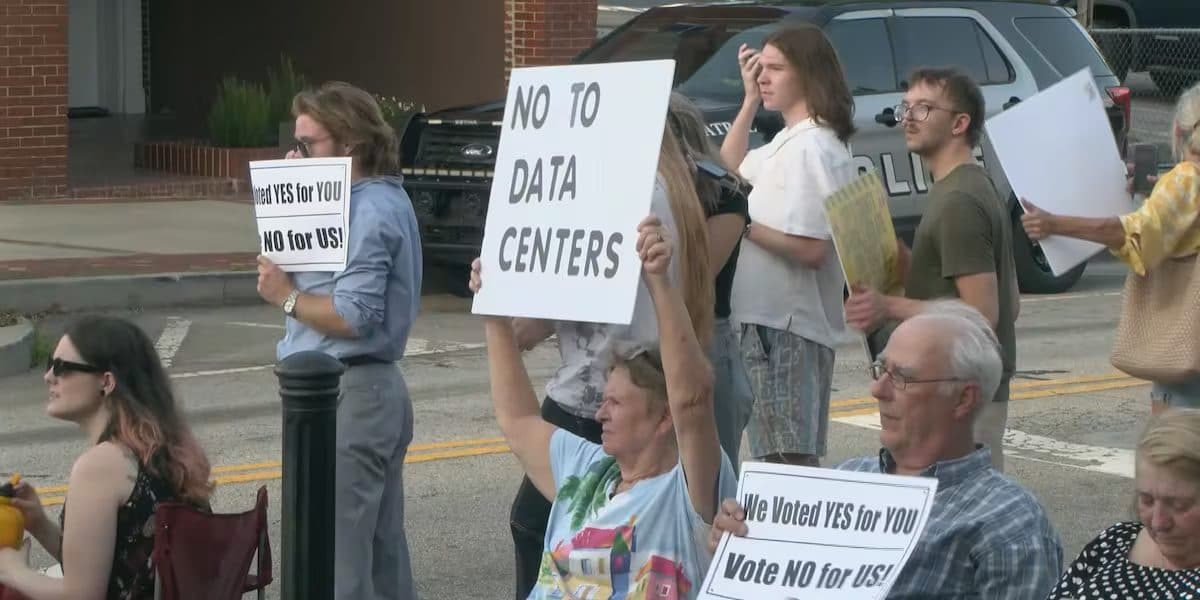
Statesboro's mayor and council voted 3–2 late on 18 August to approve a zoning map amendment allowing land previously zoned for residential development to be used for a data centre. Mayor Jonathan McCollar broke the tie. Councilwomen Ginny Hendley and Tangie Johnson voted in favour; Councilwoman Sharri Barr and Councilman John Riggs opposed.
What the common telling gets wrong
A rezoning is not a project approval. The developer must still submit a special-use permit application, which returns to the Planning Commission and then to council before anything can be built. Coverage describing this as an approved data centre is running two or three procedural steps ahead of the record — as the mayor put it, "This is not the end of this journey."
The second thing worth stating plainly: there is no tenant. No operator is named, and the developer, 4-AM Development, explained why in terms that describe the entire asset class. "I am not going to build a hundreds of millions of dollars' worth facility," Charles Way said. "Most data centre users and operators, they generally do not get engaged until after the property's sufficiently zoned."
Why that sequence matters
It inverts the order in which residents are usually asked to evaluate these projects. A council is asked to approve a land use before anyone can say who will occupy it, how much power it will draw, or what it will pay — because, by the developer's own account, no operator will answer those questions until the zoning already exists. The vote that carries the most information is therefore the one taken with the least.
A figure we are not printing
A megawatt figure for this site has circulated locally, attributed to a request made to Georgia Power. We could not read it on any page we opened ourselves — the local paper of record blocks automated access — so it is omitted here rather than carried second-hand. It is worth noting what such a number would and would not mean: a request to a utility is an application, not an allocation, and quoting one as though capacity had been granted is a recurring error in data-centre coverage.
This followed a 5–1 Planning Commission recommendation earlier in the month, and the council chamber drew organised opposition.