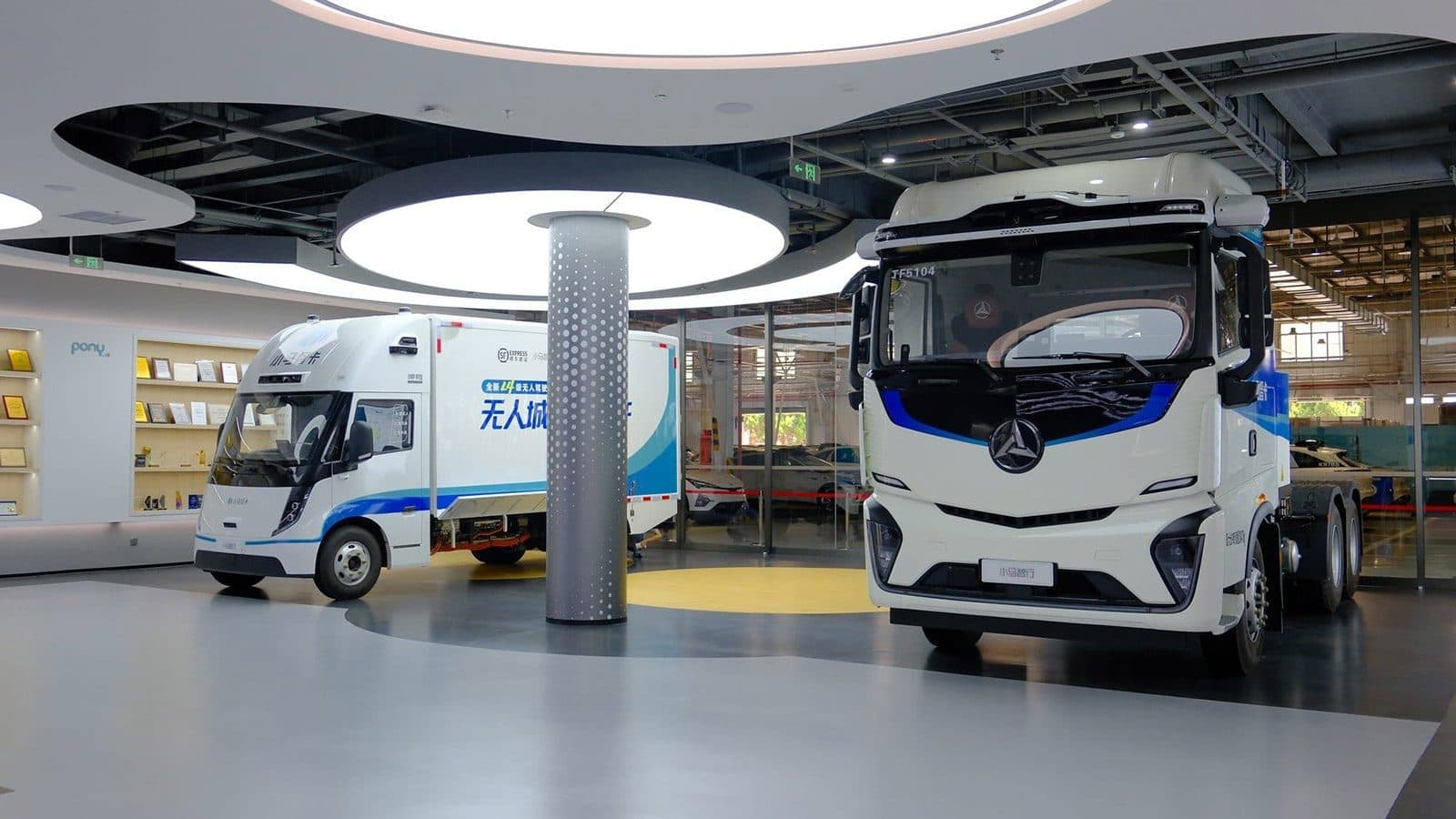
Pony.ai said on 6 August that it expects to deploy 500 to 1,000 Gen-4 autonomous heavy trucks in China over the next two to three years, across long-haul freight, bulk commodity transport and port logistics.
The cost line
Gen-4 autonomous-driving hardware costs about 70% less than the previous generation and uses 100% automotive-grade components, with a stated design life of 20,000 operating hours or up to 1 million kilometres. Cheaper and rated for a truck's full service life is the combination that separates a pilot from a fleet purchase.
What is running today
Q1 2026 robotruck revenue was $10.2m, up 31% year on year. The fleet figures Pony.ai quotes — roughly 200 trucks having carried over 1 billion ton-kilometres — are as of November 2025, not current. The first Gen-4 models are built on SANY Truck and Dongfeng Liuzhou battery-electric platforms, with Shenzhen's Mawan Port among the first sites.
Read the target as a target
500 to 1,000 is a forward-looking range, not a signed order book, and headlines compressing it to "1,000 trucks" take the top of it. A separate goal of 100,000 L4 light-duty trucks by 2030 is an aspiration on a five-year horizon; that vehicle launched in April 2026, co-developed with CATL.
Why 70% is the number that matters
Autonomous trucking has never failed on capability alone. It fails when the sensor and compute stack costs more over a vehicle's life than the driver it replaces. A 70% cut on automotive-grade parts is the first figure Pony.ai has published that makes that arithmetic close.