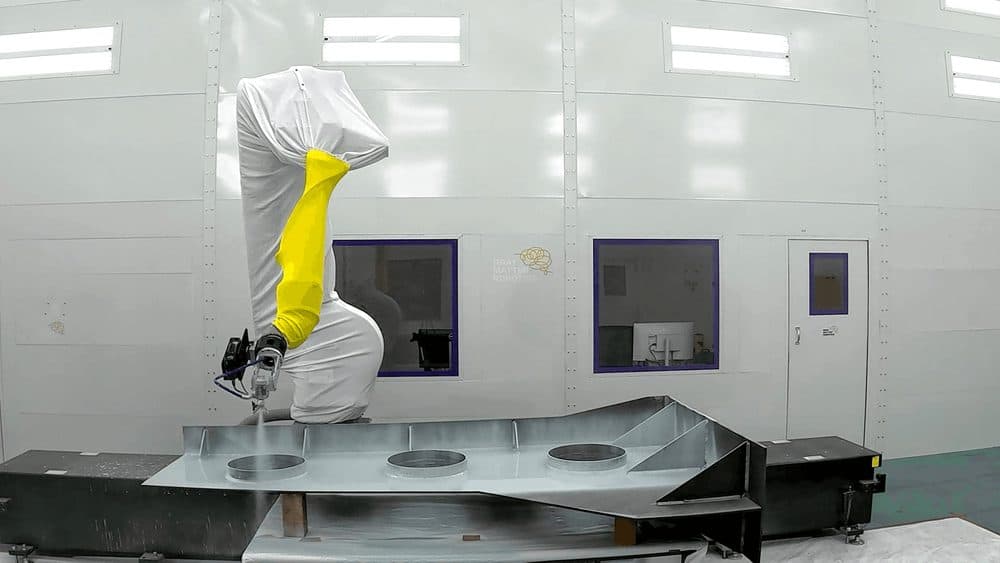
HII, the largest US military shipbuilder, said on 6 August that it has signed seven-year performance-based production agreements worth up to $900m with Path Robotics and GrayMatter Robotics. The award is contingent on both companies meeting defined technology readiness, manufacturing readiness and performance milestones.
A ceiling, not a cheque
"Up to $900m" is the phrase in HII's own release. No money is guaranteed, and HII discloses no split between the two vendors — several outlets report Path Robotics taking up to $600m, which does not appear in the announcement. Nor is this a Navy contract: HII is the buyer.
What the robots do
The HYPR programme — High-Yield Production Robotics — covers autonomous welding, grinding, blasting, painting, assembly and inspection, applied to aircraft carriers, submarines, destroyers, amphibious ships, future frigates and unmanned surface vessels. Path supplies robotic welding; GrayMatter supplies robotic sanding systems.
The constraint being bought around
HII plans to outsource more than 2.5 million shipbuilding hours in 2026, a 30% increase over 2025. Naval hulls defeat fixed automation because part mix, geometry and scale change constantly. HII's Eric Chewning framed the deal as "automation that can adapt to extreme levels of complexity, mix, and size" — precisely what conventional industrial robots cannot do.
Where this sits
It is the largest commercial commitment yet to putting adaptive physical AI inside heavy defence manufacturing, and it landed the same day Hadrian raised $1.37bn on the same premise from the other direction: one company is buying the robots, the other is being funded to run the factory.