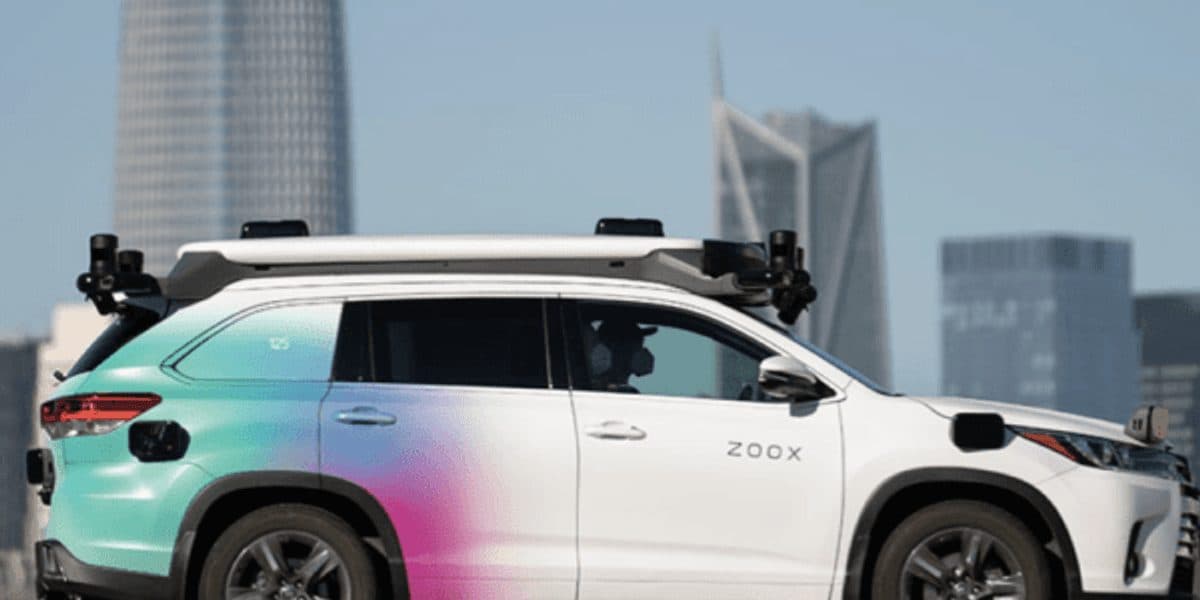
Zoox briefed press on 1 September that Houston and San Diego become its eleventh and twelfth locations, joining Austin, Dallas, Atlanta, Las Vegas, Los Angeles, Miami, Phoenix, the San Francisco Bay Area, Seattle and Washington DC. Depots are planned in both cities, and Zoox already has a San Diego office.
What the common framing gets wrong
Every headline said Zoox “expanded its robotaxi service”. Nothing was deployed and nobody can hail anything. What arrives later this month is a survey fleet: retrofitted SUVs carrying human safety drivers, doing manual mapping before any autonomous driving is attempted. Autonomous testing follows that, and the purpose-built cabin follows the testing. The “12 cities” figure counts places Zoox has vehicles, not places Zoox has a service — and the service count is two: San Francisco and Las Vegas.
Why the comparison was misleading
The announcement landed the same day Waymo opened Denver, San Diego and Tampa to the public, reaching 14 cities where it carries riders in fully autonomous vehicles. Same-day coverage bundled the two as if two robotaxi services had expanded. Waymo put paying public riders in driverless cars; Zoox sent drivers to draw maps. Setting 12 against 14 compares a pipeline to a business.
The number that is actually informative
The gap between twelve map-making cities and two revenue cities is the most useful public measure of how long the road runs between an AV permit and an AV service. It is a multi-year distance, and it is invisible in any count of “cities”.
The ceiling nobody should read as a fleet
For scale, NHTSA's exemption granted in early August permits up to 2,500 purpose-built Zoox vehicles a year for two years. That is a regulatory ceiling, not a build plan and not a deployment — the same category error as the city count, one layer up.