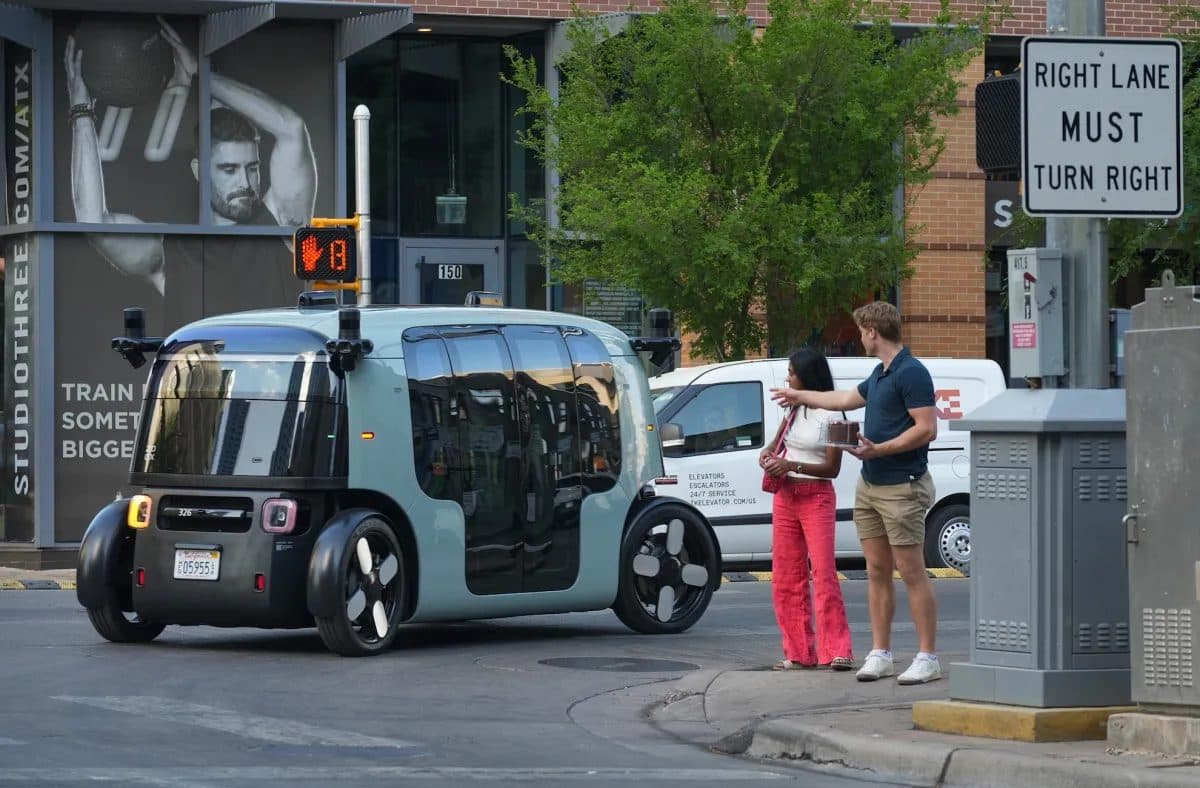
For a decade the binding constraint on purpose-built robotaxis has been that the Federal Motor Vehicle Safety Standards assume a human driver. You cannot certify a vehicle that has no windshield wiper controls and no driver airbag. On Thursday the National Highway Traffic Safety Administration granted Zoox a temporary exemption from portions of eight of those standards — the first time this has been done for a vehicle that carries passengers.
What the grant actually covers
The exemption spans FMVSS 103 (defrosting), 104 (wipers), 108 (lamps), 111 (rear visibility), 135 (brakes), 201 (interior impact), 205 (glazing) and 208 (crash protection). It runs through 31 July 2028. The vehicle carries four passengers, tops out at 75 mph, weighs 3,000 kg gross and seats riders carriage-style. Zoox will not sell it — the company retains ownership. NHTSA received 119 public comments on the petition, docket NHTSA-2025-0523.
The number being misread
Coverage has settled on "2,500 vehicles", and some of it has doubled that into a 5,000-strong fleet. Both readings are wrong. The 2,500 is a cap on vehicles introduced into commerce per 12-month period, and it is the ceiling Congress set: 49 U.S.C. 30113(d) limits equivalent-safety exemptions to 2,500 vehicles sold in any 12 months. NHTSA granted the legal maximum because it had no authority to grant more. Separately, the notice states that the number Zoox may operate simultaneously is limited by its initial Operational Authorization — a figure the document does not disclose. No fleet size has been authorised at all.
The line buried in the notice
The grant confirms that Zoox personnel may perform "limited, manual, low-speed operation of the robotaxi, with direct and constant line of sight, through an industrial handheld remote control". NHTSA explicitly classifies this as remote driving under SAE J3016 — not remote assistance. Separately, "TeleGuidance tacticians" provide remote guidance. The driverless car has a manual mode.
What it does not unlock
"First ever" needs a qualifier: Nuro received the first such exemption in 2020, for an occupantless delivery vehicle. And federal clearance does not let Zoox charge for rides in California, where CPUC and DMV driverless deployment permits are separate gates. What the grant does establish is the template every competitor will now file against.