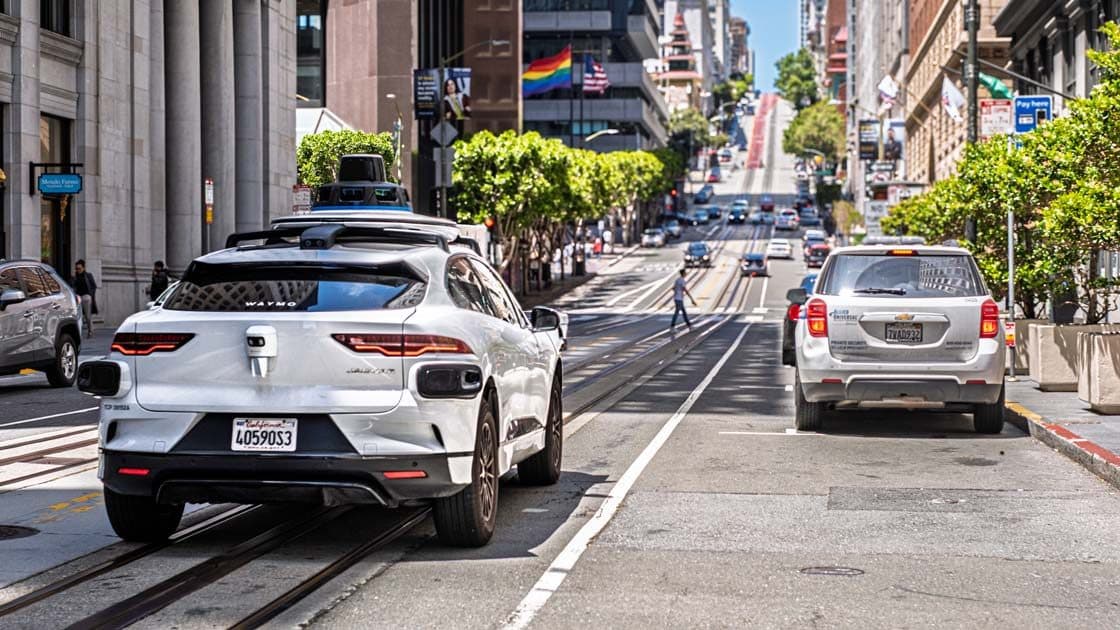
The Insurance Institute for Highway Safety published a study on Thursday finding that Waymo's driverless vehicles were involved in 68% fewer police-reportable crashes per vehicle mile than human drivers in the same cities over the same period. It is the first such comparison from an organization Waymo did not pay for.
The comparison
Roughly 50 million Waymo driverless miles against about 222 billion human-driven miles, 2021-2024, in San Francisco, Phoenix, Los Angeles and Austin. Researchers screened 736 public-road crashes with automation engaged; 89 met the police-reportable bar, 64 of them in fully driverless operation. Single-vehicle crashes were 85% lower and injury crashes 81% lower.
Austin is the outlier
The headline number hides a wide spread. Phoenix came in 76% below the human rate, Los Angeles 71%, San Francisco only 35% — and Austin was 4% higher, on what IIHS calls a relatively small sample. Lead author Eric Teoh is IIHS's director of statistical services.
The caveats IIHS put in its own headline
IIHS said the federal AV data system "isn't good enough to allow continuous monitoring of a large-scale expansion." About 25% of reported incidents were removed during data cleanup. AV companies are likelier than humans to report every qualifying crash, a bias that flatters the machines. And only Waymo discloses mileage, so no rate can be computed for any competitor.
The counterweight
NHTSA has an open investigation into Waymos failing to stop for school buses, plus a separate probe of a January incident in which a Waymo struck a child near a Santa Monica school; NTSB opened its own school-bus inquiry. NHTSA's administrator warned this month of a "clear pattern" of AVs interfering with first responders. Waymo now runs about 500,000 paid rides a week.