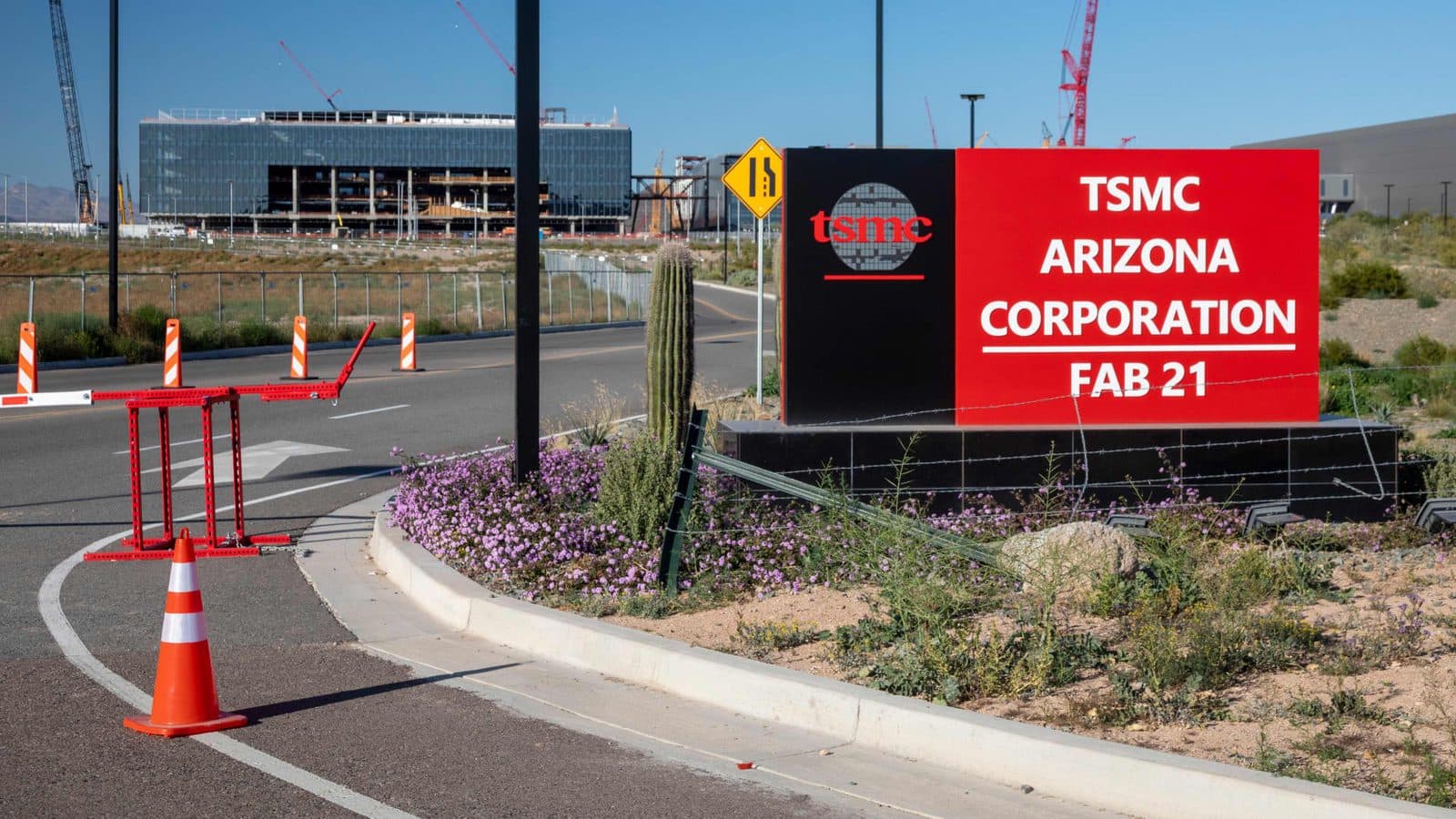
Days after adding another $100 billion to its US plans, TSMC gave the first detailed look at how the money gets spent. In a Reuters interview published Monday, July 20, chief financial officer Wendell Huang said the company sees "multi-year structural demand" from AI customers as it ramps a total Arizona investment now planned at $265 billion.
Fab by fab
Huang's status report: Fab 1 is operational — with yields "as good as" TSMC's flagship Taiwan facilities, a milestone many doubted US manufacturing could hit. Fab 2 begins moving in equipment shortly, Fab 3 is under construction, and preparatory work has started on Fab 4 and the first advanced-packaging facility. The eventual Arizona footprint: twelve facilities — ten fabs and two packaging plants — plus an R&D center.
How it got to $265 billion
The number stacked up in three steps: $65 billion originally, plus $100 billion added in March 2025, plus another $100 billion announced on TSMC's July 16 earnings call, funding at least four more fabs at 2-nanometer or better. That call also raised 2026 capex guidance to $60-64 billion and full-year revenue growth expectations to around 40% in US dollar terms, on a record Q2 profit of T$706.6 billion, up 77% year over year.
The real bottleneck
Asked what limits the pace, Huang did not say chips, tools or power — he named Arizona's construction-worker shortage. And on funding the ramp, he said TSMC "would not rule out issuing new bonds," a notable signal from a company that has historically financed expansion largely from cash flow.
Why customers keep committing
With Nvidia, Apple, AMD and the hyperscalers all fighting for leading-edge capacity, TSMC's message is that the AI cycle is not a spike but a structural re-rating of demand — and that it will manufacture an American answer to it, fab by fab.