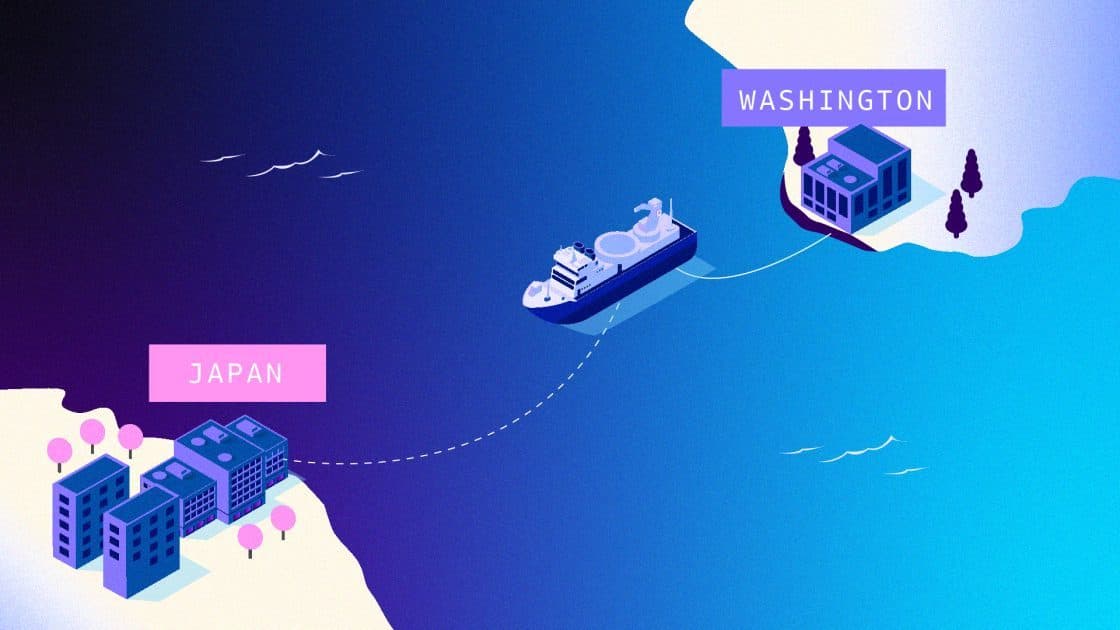
AWS is building a private subsea cable between the United States and Japan. Announced on 2 September, Sta'O'Nuk is designed to add 420 terabits per second of transpacific capacity to the AWS global network across 20 fibre pairs, and is expected to be operational in 2029. The name was granted by the Quinault Indian Nation.
The geography is the point
This is the first international cable to land in Washington state in almost 30 years, creating what AWS calls an independent network path. Nearly all transpacific traffic between North America and Asia currently transits a narrow set of landing zones in California and Oregon — a concentration that is a single seismic event, or a single anchor-drag, away from being a problem. A Washington landing is route diversity, purchased at cable prices.
Who builds the shore end
The Washington cable landing station and backhaul come from Toptana Technologies, an indigenous-owned operator tied to the Quinault Indian Nation, with Assured Communications as programme manager and operations provider. Landing rights and coastal access are the hardest part of a cable project to acquire in the United States, and that is the constraint this partnership addresses.
What the common framing gets wrong
Three things. 420 Tbps is design capacity, not lit capacity — cables are commissioned with a fraction of their design throughput illuminated and upgraded over their life, so the figure describes the ceiling, not day-one service. No permits are announced: a project of this type requires a landing licence and coastal and foreign approvals, and none are claimed in the announcement, which is normal at this stage but means the 2029 date is a target with a regulatory path still ahead of it. And it is not AWS's first private cable — the company has already gone this route across the Atlantic. The novelty is the Pacific corner it lands in, not the ownership model.
Why hyperscalers own cable now
Leasing capacity on consortium cables was the industry default for decades. Owning the fibre outright is what happens when a company's traffic growth outruns the consortium build cycle and its latency requirements become a product feature rather than an operations metric. The 2029 in-service date is the honest part of the announcement: infrastructure at this layer is planned in half-decades, against demand nobody can forecast that far out.