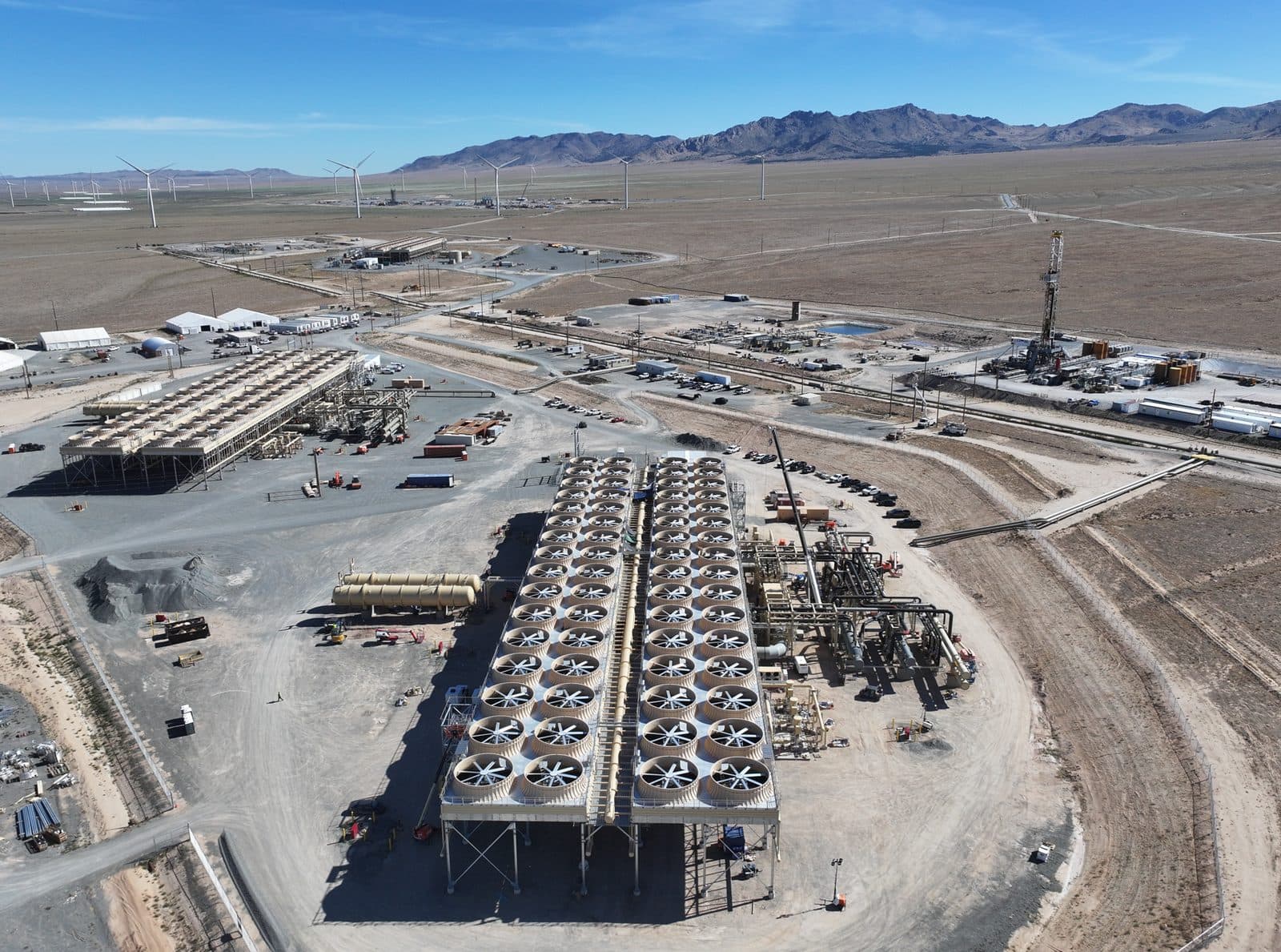
Fervo Energy and Google announced a signed 396 MW power purchase agreement on 1 September, from the Cape Station GeoCluster in southwest Utah, expected online in 2028. It is described as the largest enhanced geothermal PPA to date — a superlative about contract size, not about generation.
What the common framing gets wrong
Coverage merged three separate things into “Google locks up nearly a gigawatt of geothermal”. First, only 396 MW is contracted. The additional ~600 MW is an option Google may exercise by June 2030, and the release conditions it on “engineering feasibility, state and local approvals, and commercial conditions”. An option is not an offtake. Second, none of it is generating: the contracted GeoCluster delivers in 2028, and the only operating asset the release references is the 2023 Project Red pilot.
The load does not exist yet either
Third, and most easily missed, the release says the power is intended for a “potential data center in Utah” whose “final data center plans remain subject to” the same conditions. This is a power contract signed ahead of both the plant and the data centre — not power procured for an existing campus. Read in order: an unbuilt generator, contracted to an unbuilt load, with the larger half of the headline figure unexercised.
The scale-up against the prior deal
The comparison that gives the number meaning is Fervo's earlier PPA with Google and NV Energy: 115 MW, signed June 2024. This is roughly three and a half times that, from a company that only listed this year (Nasdaq: FRVO, S-1/A filed 11 May 2026).
The concentration risk sits with the generator
Hyperscalers contracting firm, 24/7 carbon-free capacity years ahead of the load is now normal. What is less normal is the counterparty structure: a newly public, pre-scale generator underwriting a late-decade build on a single buyer. If the option lapses, most of Cape Station's late-decade output has no contracted home.