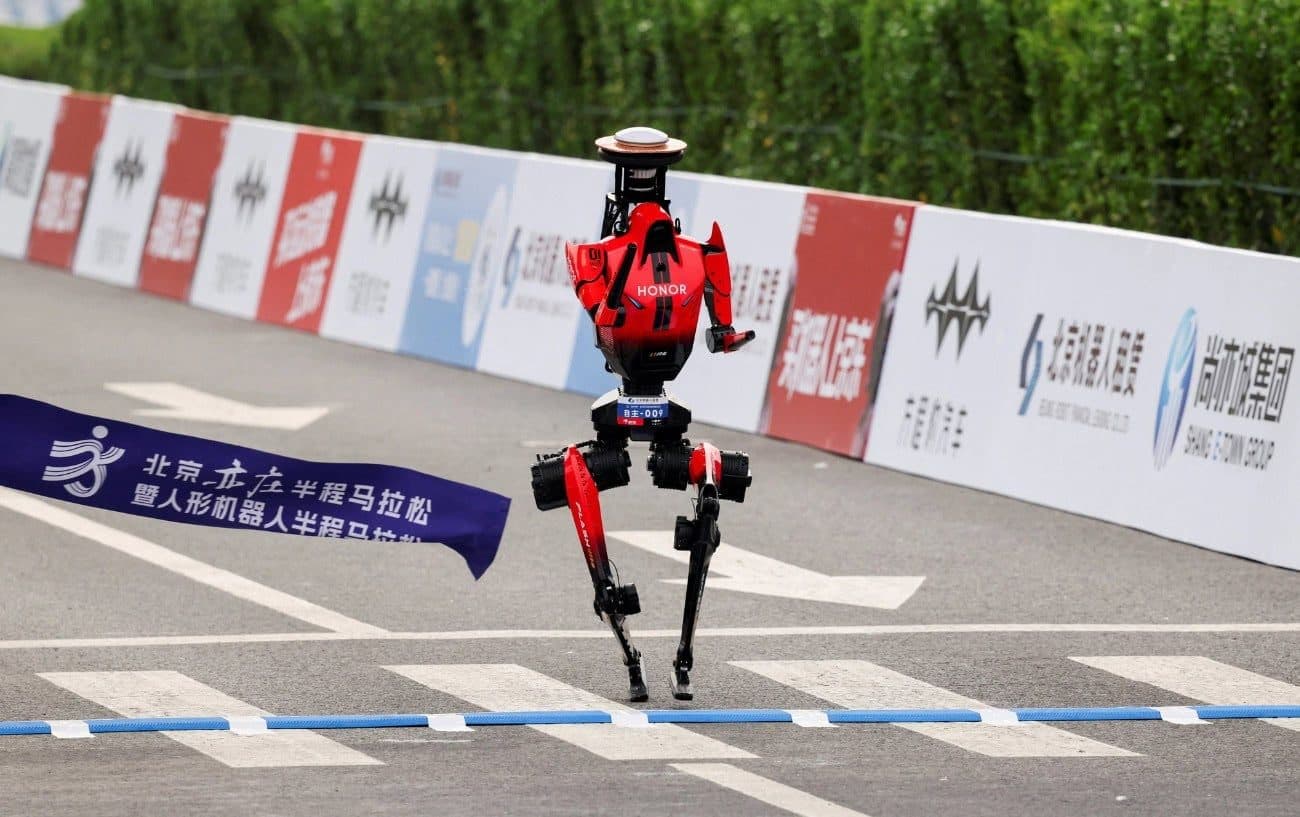
Honor's humanoid robot D1, known in Chinese as 闪电 or "Lightning", completed the 10-kilometre category of the Malaysia Marathon in Kuala Lumpur — its first appearance outside China and, the company says, the first robot entrant in the event's history. Honor's global chief marketing officer Guan Haitao disclosed the result on 30 August; IT之家's report is timestamped 17:58:08 Beijing time, 09:58:08 UTC.
What was claimed
Honor said the D1 finished the course beneath the Petronas Towers at night and refreshed the event record. The machine stands 169 cm, wears red mecha-styled bodywork, and is built for speed and acceleration. A second Honor robot, the A1, appeared in the 5 km alongside Malaysia's prime minister.
The record that had no previous holder
A record requires a prior mark. If the D1 was the first robot ever to enter this race, then any distance it covers is simultaneously the best and worst robot performance in the event's history, and "refreshed the event record" carries no information about how fast it went. That would be a pedantic objection if a time had been published. None was. We are not printing one, because Honor did not release it and no independent timing has surfaced — which is itself the most telling fact about the announcement.
The other records deserve the same reading
The D1 arrives credited with breaking human records over 100 metres and the half marathon, and with a 2 minutes 30 seconds finish in the 1500 m large-format final at the second World Humanoid Robot Games. Take that last one seriously for a moment: 2:30 over 1500 m would be almost a minute inside the human world record. Marks set at a robot sports meet, on a robot course, with handlers permitted, are not comparable to results under athletics governing-body conditions — different surface, different rules, different oversight. Presenting them as human records broken is a category error that has been repeated across a year of coverage.
What the outing actually is
The robot travelled with a phone launch and a Merdeka parade slot. That does not make the engineering fake — a bipedal machine covering 10 km outdoors, at night, on public roads is a genuine reliability demonstration, and reliability over distance is where humanoids usually fail. It makes the framing promotional. The demonstration is the story; the record is the marketing.