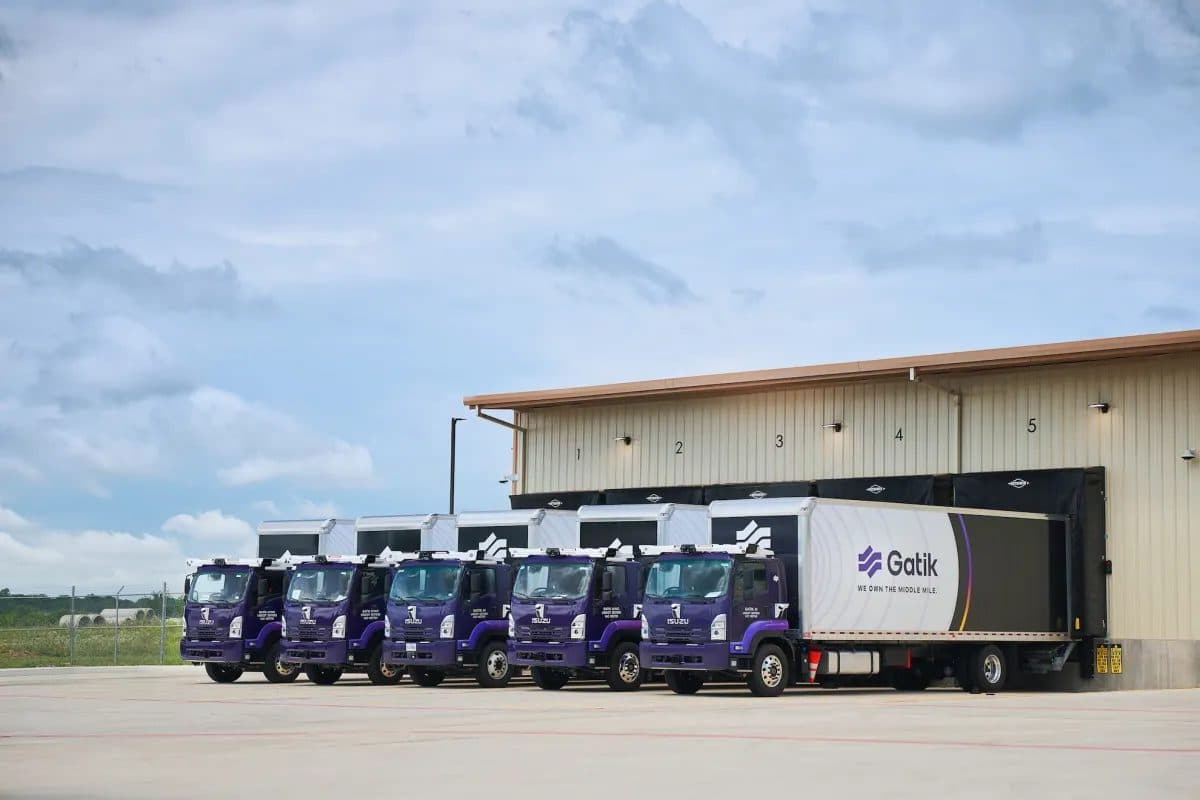
Autonomous-freight company Gatik announced a $200 million Series D on Tuesday, co-led by the Qatar Investment Authority and Koch Disruptive Technologies, with Millennium Management, ARK Invest and Intact Private Capital participating. The company operates in Texas, Arizona, Arkansas and Canada. No valuation was disclosed.
The three figures being quoted
Verbatim from the release: "more than $600 million in contracted revenue", "85,000 fully driverless orders completed", and "99% on-time delivery." Also verbatim, from the same release: "dozens of driverless trucks already operating today", with an ambition of thousands.
What the common framing gets wrong
Three separate slips, all in the same direction. Contracted revenue is an order book, not revenue. It is the undiscounted sum of multi-year commitments, most of it unearned and much of it contingent on Gatik growing from dozens of trucks to thousands — yet several write-ups shortened it to "$600M in revenue." 85,000 orders is a count of deliveries, not a distance. Gatik runs short fixed middle-mile routes; 85,000 completions on repeated short hauls represents a far smaller autonomy footprint than the number suggests. And the PepsiCo agreement being used as the news peg is from 8 June — two and a half months old — so headlines reading "raises $200M following PepsiCo deal" imply a sequence the release never claims.
The missing number is the one everybody else leads with
The release contains no autonomous mileage figure, no disengagement rate, and no safety metric at all. Miles driven without a human is the metric every AV company publishes when it is flattering. Gatik publishes order counts and on-time percentages instead — operational service-level figures that a logistics customer cares about, and that reveal nothing about how the driving is going.
Who is writing the cheque matters
A sovereign wealth fund and an industrial conglomerate co-leading, rather than venture firms, points at where capital now believes driverless freight actually closes: fixed-route middle-mile, not long-haul. That is a narrower and more defensible thesis — and it is being funded without the safety disclosure the sector normally competes on.