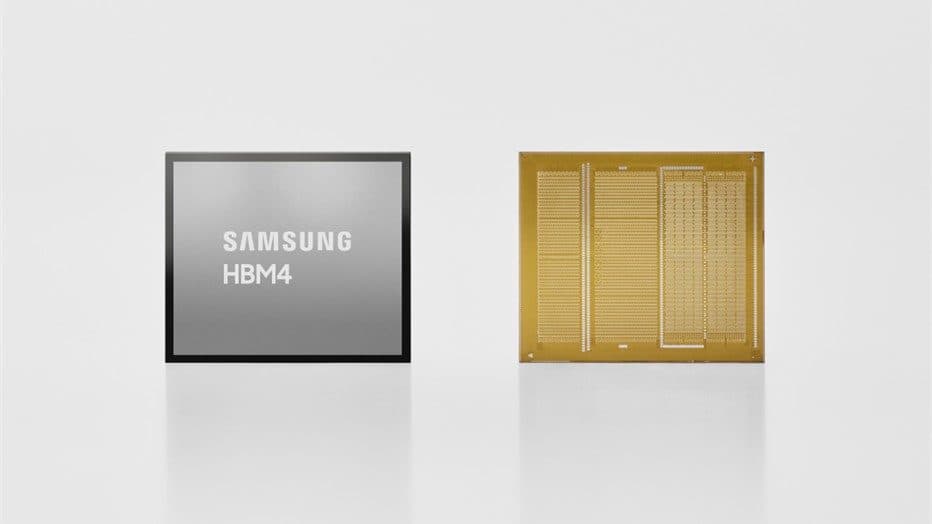
Samsung Electronics' HBM4 yield has reached roughly 80%, up from below 60% when mass production started around February 2026, according to an industry assessment published on 10 August. Eighty per cent is the level memory makers call a golden yield — the point at which a line stops burning money on scrap.
Why yield decides this race
HBM4 stacks are the constraint on next-generation accelerators, and capacity announcements do not move share on their own: a fab running at 60% yield ships far less than its wafer starts suggest. Samsung is separately reported to be running above 70% in HBM4E reliability testing.
The commercial claim attached to it
Samsung is said to be targeting HBM revenue in the third quarter more than triple the second quarter's, and to be aiming to lift HBM share to roughly its DRAM-level share of about 38% by the end of 2026. That would close much of the gap with SK hynix, the incumbent leader.
Attribution matters here
Samsung has not publicly confirmed the 80% number. The reporting uses assessment language, and it should be read as an industry estimate rather than a disclosure. The companion claim now circulating as fact — that Samsung overtakes SK hynix in 2027 — is a UBS projection, not a result. No customer qualification by Nvidia, AMD or Broadcom is confirmed in this reporting.
Not the concept part
This is shipping HBM4, distinct from Samsung's separately publicised zHBM concept, which sits after HBM5 on the roadmap with no production timeline.