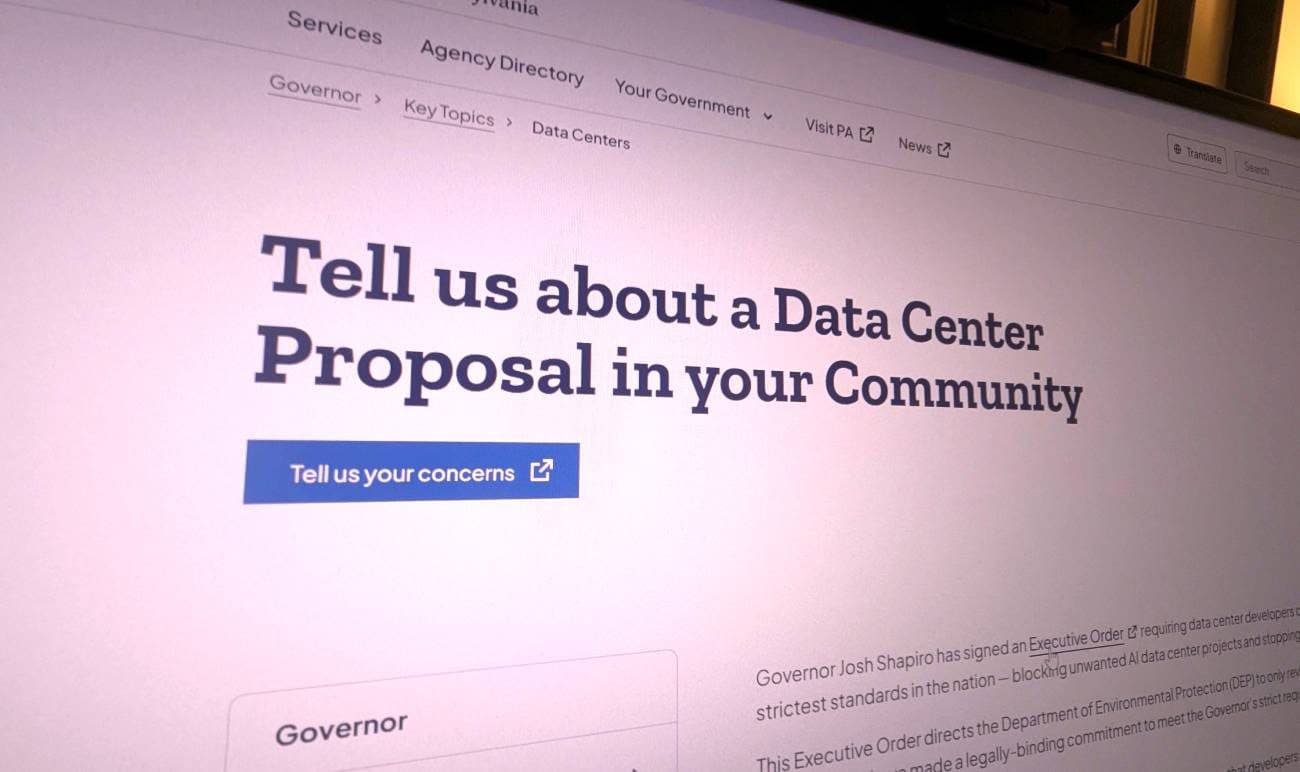
Pennsylvania published a Data Center Permit Tracker on 21 August, a GIS map built by the Department of Environmental Protection showing the location and environmental-permit status of proposed data-centre projects, with a public comment form attached. It operationalises an executive order signed earlier the same week, on 18 August.
The two numbers in one sentence
The Commonwealth's own page states that it is aware of at least 100 proposed data centers — and then, in the same sentence, that the vast majority "have not formally approached the Commonwealth for any discussion of permitting or taken meaningful steps toward development," and that no AI data center is currently operational in the state.
What the common framing gets wrong
"Pennsylvania tracks 100+ data centres" will be read as a pipeline. It is a count of proposals — announcements, land options, press releases — and the state says outright that most of them have never opened a permitting conversation with it. The map measures developer intent. The denominator nobody will quote is zero operational. Second: a tracker is not a regulation. The binding instrument is the executive order, and an executive order directs state agencies rather than developers — it binds DEP's process. The "local approval first" condition means the real gate remains at township level, where it always was. Third, "strictest standards in the nation" is the Governor's characterisation, not an assessment.
What the order actually requires
Before DEP will review a permit application, a developer must pay the full cost of all energy its project needs rather than shifting it onto consumers; commit to open, transparent engagement with local residents and leaders; hire, train and invest locally; and meet heightened environmental standards including strict water conservation. Separately, all data-centre projects have been removed from the PA Permit Fast Track Program, and will not be considered for it going forward. DEP reviews only after legally binding commitments and local approval are in hand.
The gap is the point
Every state courting AI infrastructure has been quietly absorbing grid and water costs. Pennsylvania has written "pay your own energy bill, no fast track, get local consent first" into the front of its process, published a map behind it, and in doing so conceded that after all the announcements not one AI data centre is actually running there. The distance between announced and built is the entire build-out story, stated by a state about itself.