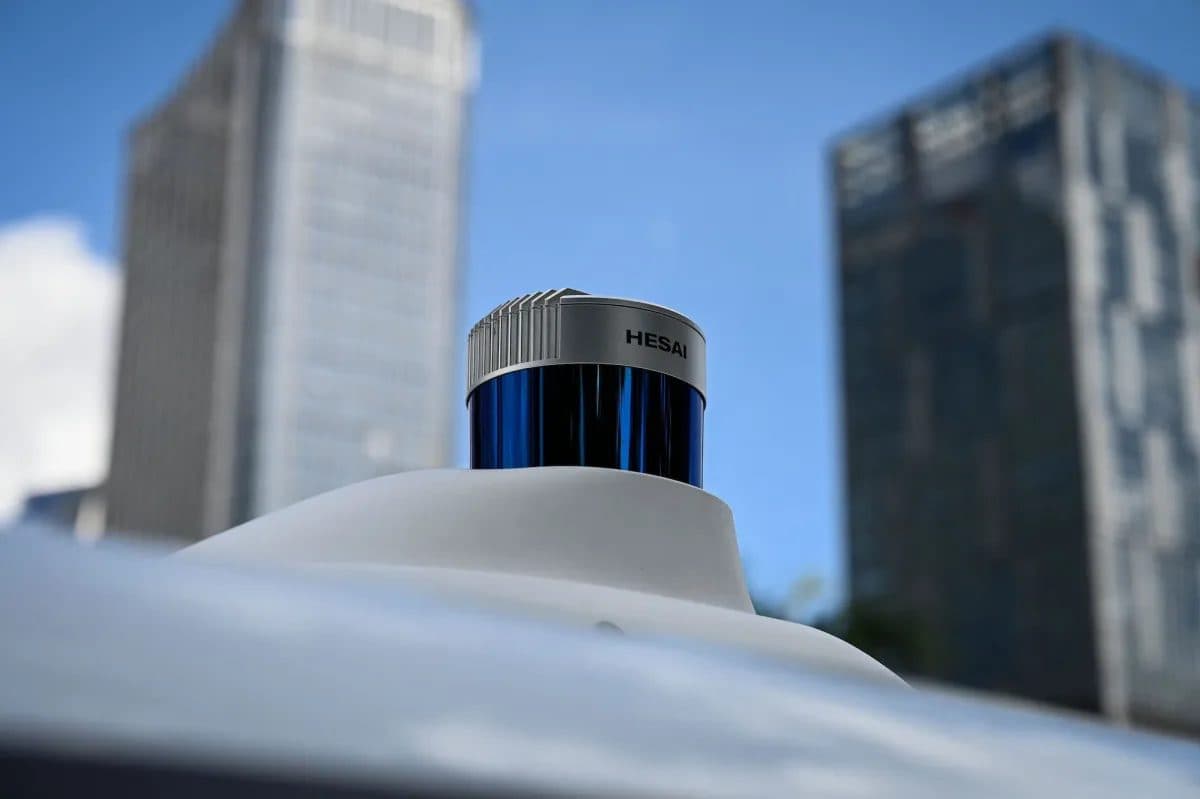
Idaho National Laboratory, a Department of Energy facility, is conducting a cybersecurity review of Chinese-manufactured lidar sensors, according to reporting published at 16:01 UTC on 21 August. The work is not government-funded. It is paid for by an undisclosed company or group of companies in the electric and autonomous vehicle industries.
What the common framing gets wrong
"A US government lab is probing Chinese lidar" reads as a federal investigation with federal authority behind it. It is industry-funded contract research performed at a government lab — and the difference is not cosmetic. A private sponsor sets the scope, defines the questions and decides who sees the results. Whose bill of materials is being defended, and whose is being examined, are questions the funding structure answers and the disclosure does not. A second point routinely conflated: Hesai and RoboSense appear on the Department of Defense's 1260H list, which is a designation of Chinese military-company affiliation. It is not a sanction and it is not an import ban.
Nobody named will say they knew
The roster of denials is unusually complete. Rivian, General Motors, Ford, Kodiak, Lucid Motors, Nuro and Uber all said they were unaware the review was happening. Nvidia, Zoox and Aurora did not respond. Hesai and RoboSense, the two Chinese suppliers most exposed, declined to comment. Either the sponsor is outside that list, or one of them is funding it and not saying so.
The two failure modes on the table
The identified concerns are specific rather than atmospheric: mass disabling of deployed sensors, and extraction of lidar data — a continuous, high-resolution three-dimensional record of public roads and everything on them. Both assume the units carry network-reachable firmware, which modern automotive lidar does.
Why price is the exposure
Lidar cost roughly $75,000 a unit a decade ago and now costs hundreds of dollars. That collapse is what made driver-assistance and robotaxi programmes viable at scale, and it happened largely because Chinese suppliers drove it. Cheap supply is concentrated supply: if the review produces findings, it reaches into the parts list of nearly every US autonomy programme at once. This is also single-sourced reporting with anonymous sourcing and no public document — the facts as reported are coherent, but nothing here is independently verifiable, and neither INL nor the sponsor has confirmed the work on the record.