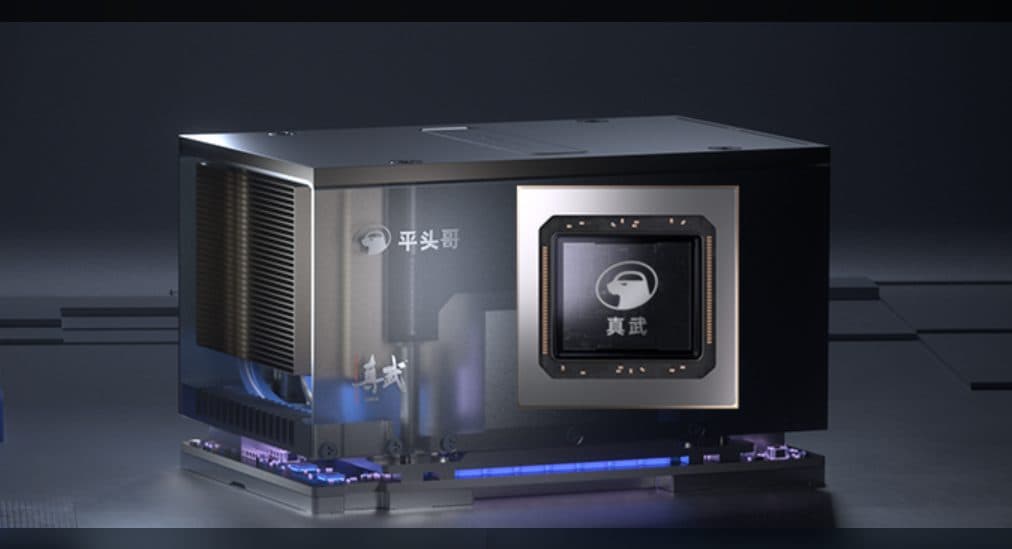
Alibaba chief executive Eddie Wu said on 20 August that the company's second-generation T-Head AI chip is expected to tape out and enter production this year. The remark came around Alibaba's June-quarter results, in which the T-Head silicon business was folded into a newly formed AI Cloud and Compute Services segment.
What tape-out means
Tape-out is the moment a finished design is handed to a foundry to be committed to masks. It is a milestone in design, not in supply. After tape-out come first silicon, bring-up, validation, respins where needed, and only then volume production. A chip that is expected to tape out before December is a chip that, on the most optimistic schedule, contributes meaningful capacity in the following year.
What the common framing gets wrong
Headlines are reading this as Alibaba having a second-generation accelerator. It does not. The statement is an expectation about a future event, delivered in the conditional register executives use for roadmap items, and the chip currently deployed in Alibaba's own infrastructure is the previous generation. The gap between "expects to tape out this year" and "is deploying" is at minimum several quarters, and roadmap dates in Chinese domestic silicon have a poor record of holding. The reorganisation adds a second complication: with T-Head inside a combined AI Cloud and Compute Services segment, external observers lose the ability to see silicon revenue or volumes separately from cloud revenue.
The context that makes it matter
Export controls have made domestic accelerators a strategic necessity rather than a cost-optimisation exercise for Chinese hyperscalers. That raises the stakes on roadmap statements and also raises the incentive to make them early. Alibaba disclosing on the same day that chip-component pricing pushed its capital expenditure sharply higher is the more concrete signal of where the constraint currently sits.