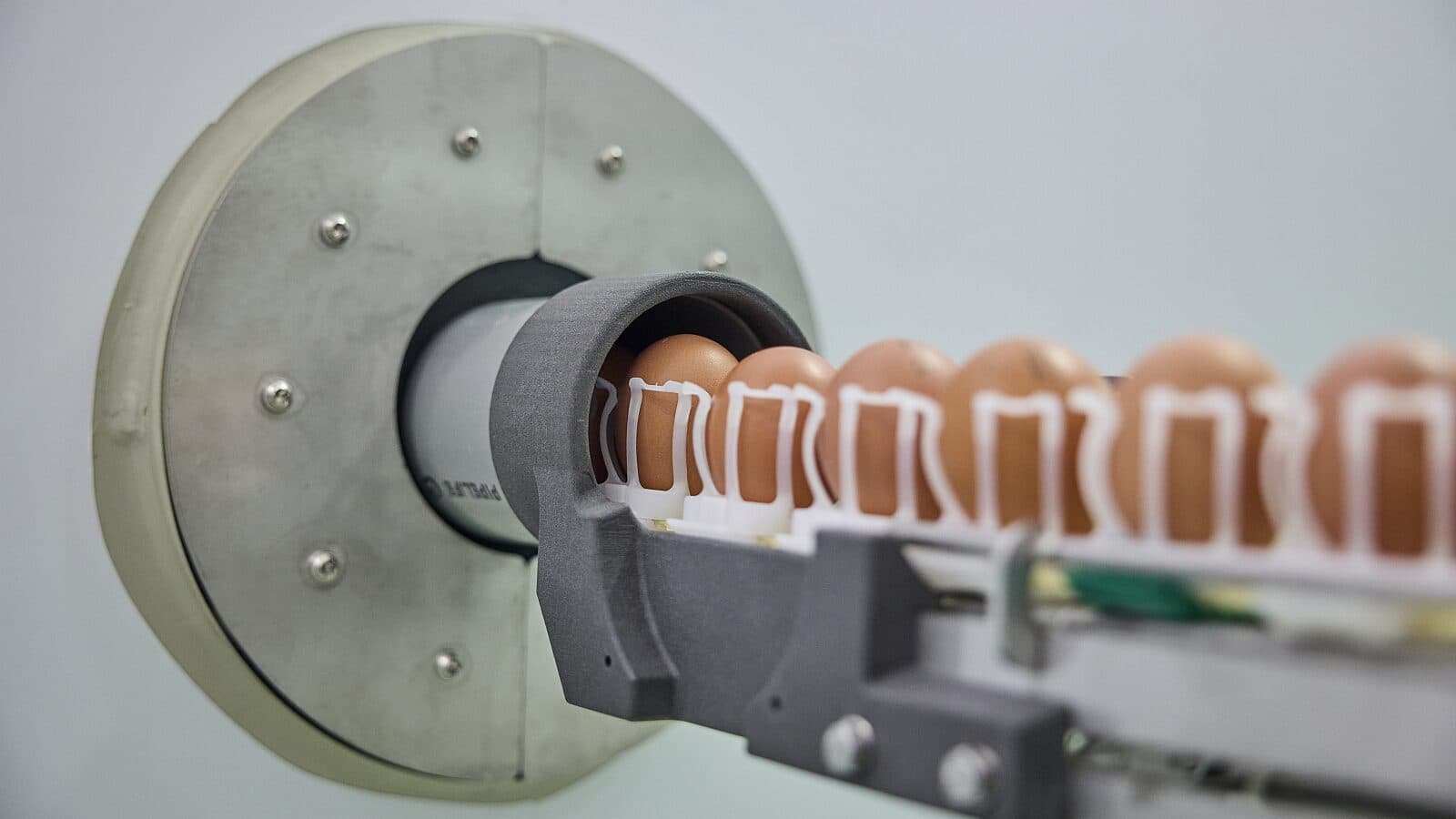
Orbem, a German imaging company, has switched on its first US system for MRI-based in-ovo sexing, reported on 27 July. The machine determines a chick's sex inside the egg before hatch, without breaching the shell — the alternative to culling male chicks, which the industry does at enormous scale because males do not lay.
The technical claim
Throughput of up to 24,000 eggs an hour at a claimed 99.5% accuracy, with image analysis cut from roughly 15 minutes to under one second — which is the part the machine learning does, and the part that makes the economics work at line speed. Detection is optimal at days 11 to 12, with gonads differentiating from about day 6. The company says it adds around one cent to the retail price of a table egg. Orbem's own materials report 200 million eggs scanned and 11 installations across six countries, with the US site listed as in progress.
Why the US is different
Germany and France have culling bans in force and Italy's arrives in January 2027. The United States has no such mandate, so adoption here is driven by retailers and consumer premium rather than by law. The structural argument is concentration: 12 to 15 large US layer hatcheries would cover a substantial share of national production, and turning over the US laying flock takes about two years. That is an unusually short path from a dozen installations to a national change.
What 'rollout' actually means
One system operating. A second going live in mid-August. A third in 2027. Orbem's own product page still describes the US installation as in progress. No US customer is named — the strongest statement offered is that the company expects an announcement from a large retailer soon, which is a forward-looking statement rather than a signed deal. The 99.5% accuracy is vendor-claimed and not independently verified in the reporting. And the €55.5 million Series B that appears alongside this news closed in January 2026; counting it as fresh investment against this announcement would be double-counting.
The competitive point
The incumbent approach is hyperspectral imaging, which cannot sex white-shell layers — the dominant type in US production. That limitation, more than the throughput figure, is why an MRI-based system has a path here at all.