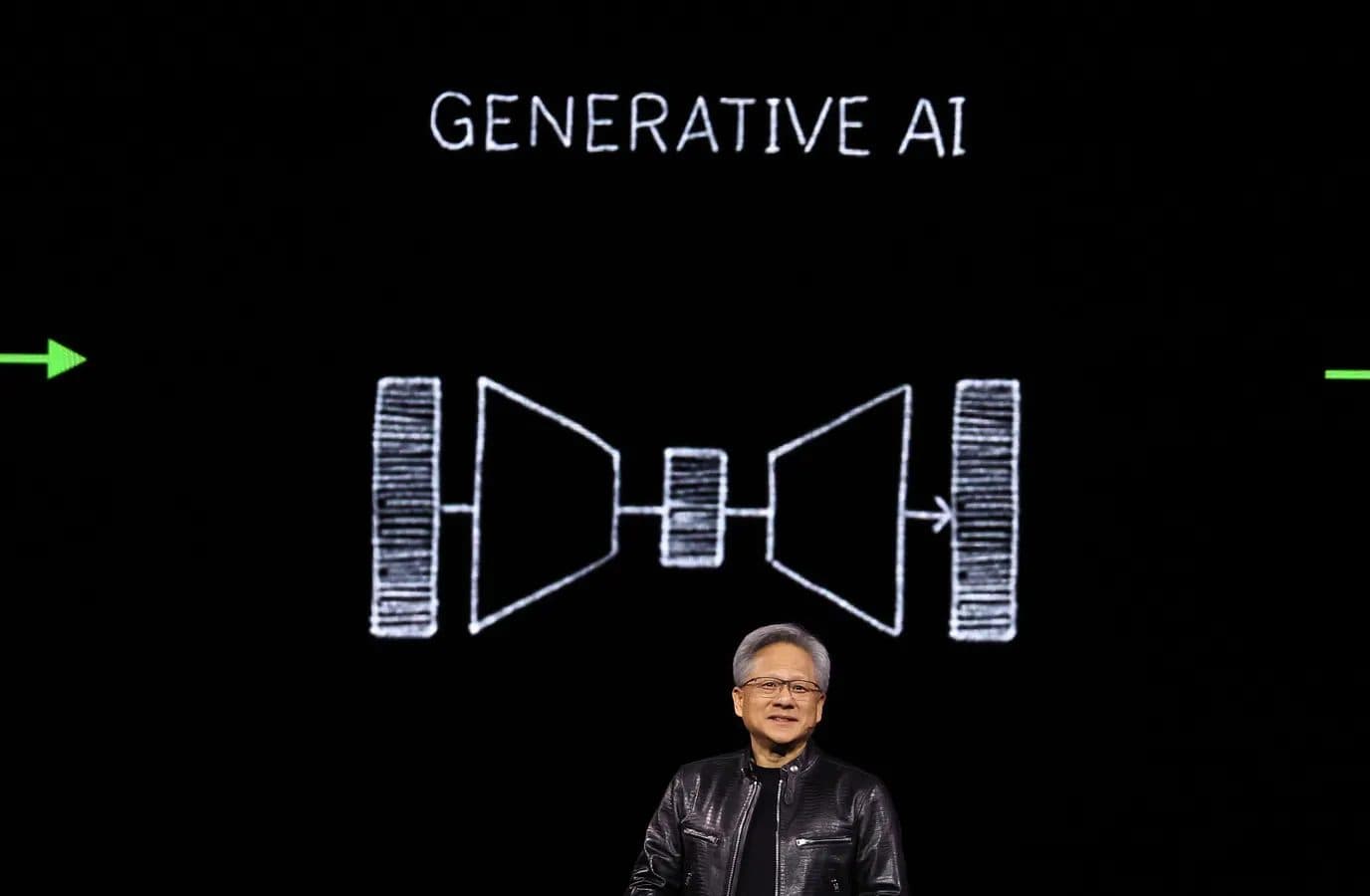
An industry letter arguing that Washington should not restrict downloadable AI models went from 25 signatories to 50 in roughly a day. It was published by Jensen Huang on July 24 — the first post of his life on X — under the banner of open weights and American AI leadership, and it cleared 11 million views. Signatures were still arriving while the coverage of it was being written.
Who joined in the second wave
Roughly two dozen companies signed after publication. The named additions are OpenAI, Google, AMD, Cisco, Cloudflare, GitHub, Block and Ollama. OpenAI’s position moved during the episode rather than at the start: it was absent from the original 25, and is on the expanded list. The letter’s argument is that openness prevents lock-in, and that concentrating capability in a few closed providers creates single points of failure.
What “doubled overnight” flattens
The clean doubling is a headline artifact — the roster moved in stages, not in one jump, and the tidy 25-to-50 symmetry is coincidence rather than a milestone anyone aimed at. The second and larger distortion is the reading of the two absences. It is tempting to write that Amazon and Anthropic refused, and Forbes is explicit that neither has explained itself and that it would be a mistake to assume the reason. The plausible motives run from the commercial — Anthropic sells access to closed frontier models — to the substantive position that weights, once released, cannot be recalled. Neither company has said which, if either, applies.
Why the absences are the story
A letter that collects every major American compute, cloud and model vendor except two makes those two conspicuous. Anthropic is the clearest case: it has argued against open weights on the record for months, so its absence is consistent rather than surprising. Amazon is the harder one, because it is Anthropic’s largest investor and also one of the largest distributors of open-weight models through its own cloud — a position that points in both directions at once.
What is actually at stake
The fight is over whether US companies will be permitted to deploy Chinese open-weight models, currently the cheapest capable option on the market. A restriction aimed at Chinese weights would land on the American firms that build on them, which is why the signatory list is dominated by infrastructure and tooling companies rather than by frontier labs.