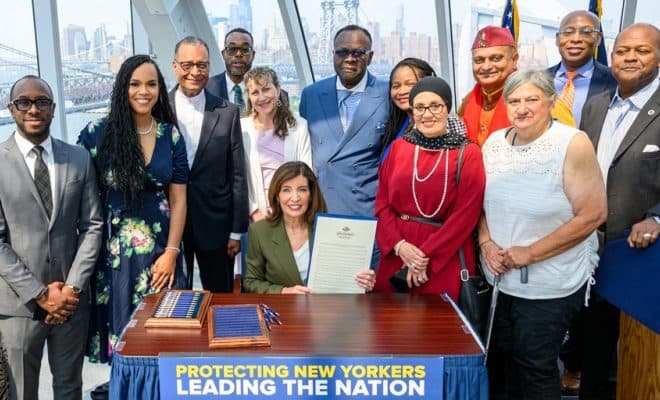
The data-center building boom just hit its first statewide wall. Governor Kathy Hochul signed Executive Order No. 62 on July 14, 2026, making New York the first US state to freeze approvals for new hyperscale data centers while regulators study their toll on power, water and consumers. It is a permitting pause, not an outright ban, but it lands squarely on the AI industry's most acute bottleneck: where to put — and how to power — the next wave of compute.
What the order does
The moratorium covers facilities that draw 50 megawatts or more. During the pause, the state's Department of Environmental Conservation "will not issue any discretionary permits not already deemed complete," effectively stalling projects still in the environmental-review pipeline. The freeze can run up to one year, tied to completion of a Generic Environmental Impact Statement examining energy demand, water use and quality, and air quality.
The rationale
Hochul framed the order around ratepayers, warning that a rush of energy-hungry facilities could push up household utility bills and strain the grid. New York's grid operator, NYISO, is carrying roughly 12 gigawatts of data-center load in its interconnection queue, with more than 8 GW of requests added in the past year alone. The governor also directed officials to pursue legislation repealing sales-tax exemptions that large data centers currently enjoy — a second, fiscal lever on top of the permitting freeze.
What it is not
The mechanism matters: this is an executive order pausing discretionary environmental permits, not a law passed by the legislature, and it does not halt data centers already operating or shut down all construction. Smaller facilities below the 50 MW threshold are untouched. The tax-exemption repeal remains only a directive to pursue, not an accomplished change.
A precedent for the buildout
New York's move gives other states a template at the exact moment hyperscalers are committing tens of billions to multi-gigawatt campuses. With Meta, Microsoft, Amazon and OpenAI-aligned developers all chasing land and power, a first-mover moratorium in a major state signals that the political economy of AI infrastructure — bills, water, grid capacity — is becoming as decisive as chips and capital.