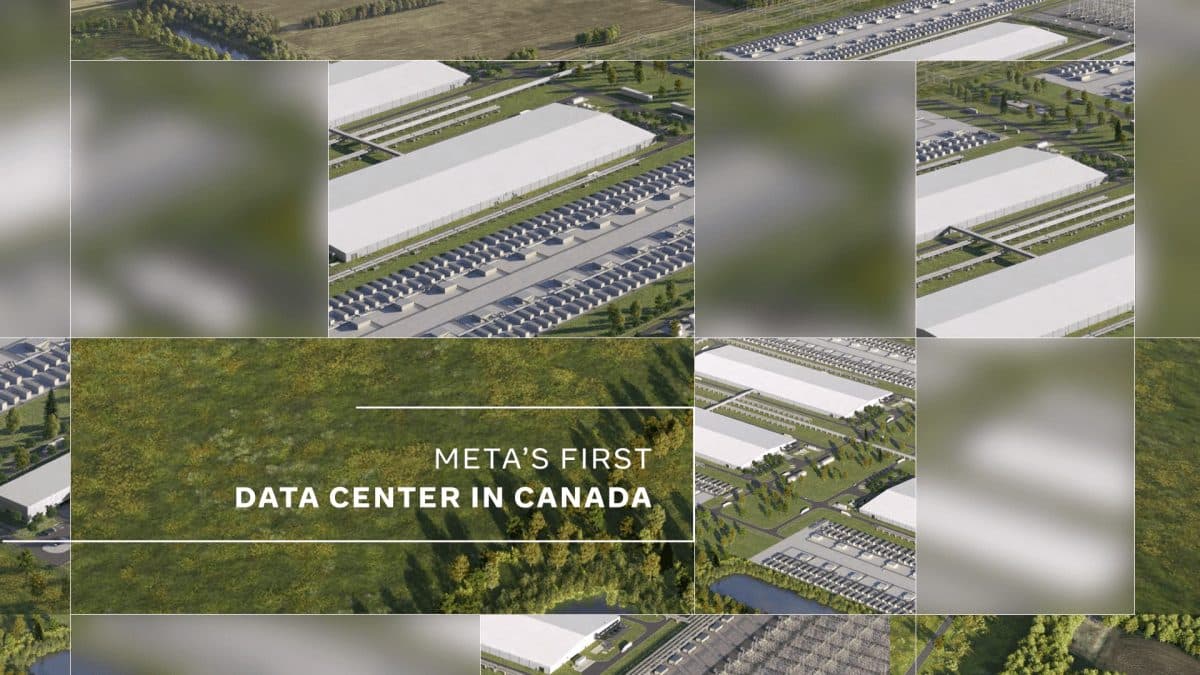
Meta broke ground on its first Canadian data center around July 8, 2026, a 1-gigawatt campus in Sturgeon County, Alberta, north of Edmonton, backed by more than CA$13 billion (about US$9.1 billion). It is the company's 33rd data center worldwide.
A big bet north of Edmonton
The project was announced alongside Alberta Premier Danielle Smith. Meta says it will support roughly 3,000 construction jobs at peak and more than 300 permanent operational roles once the facility is online, and it is committing about CA$60 million toward local infrastructure such as roads and water systems.
Cooling without the water
The campus is designed around closed-loop liquid cooling paired with dry cooling, with no operational water use in the cooling system — a pointed answer to the mounting scrutiny of AI data centers' water footprints. Meta says the site will run on 100% clean and renewable energy commitments.
Powering a gigawatt
Feeding that load are tied regional energy deals, including a roughly 970-megawatt "Greenlight" natural gas plant valued near CA$4.6 billion and a 250-megawatt power contract with Capital Power. The mix underscores how even "clean-energy" AI campuses are leaning on new gas generation to guarantee round-the-clock supply.
One node in a much larger fleet
Alberta is a single piece of a far bigger buildout. A day later, an internal Meta memo reviewed by Reuters (July 9) showed the company added 1 gigawatt of compute in the first half of 2026, plans about 5.5 gigawatts more by year-end, and aims to roughly double to 14 gigawatts in 2027 — partly by leaning on its in-house Iris AI chip, which enters production in September, to cut its reliance on Nvidia and AMD.