Nvidia and the Japanese government used a Tokyo press event on July 16 to announce what they are billing as the world's first national AI infrastructure — a state-backed compute base built specifically for physical AI, the branch of the field concerned with autonomous control of machines rather than chatbots.
The machine itself
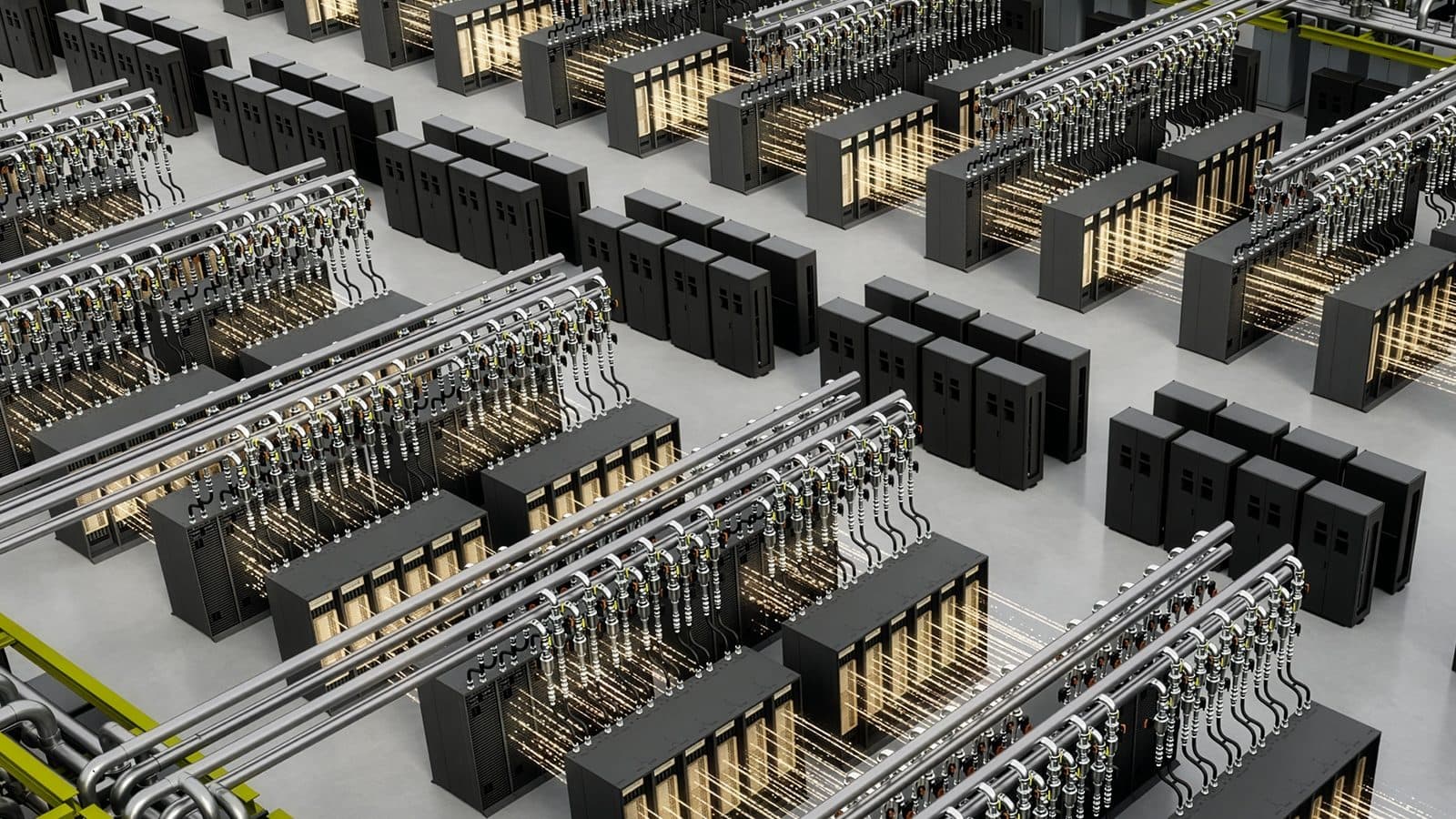
The centerpiece is an Nvidia Vera Rubin AI factory to be established and operated by Noetra Corp. It pairs 13,750 Vera CPUs with 27,500 Rubin GPUs across 140 megawatts of data-center capacity, running Vera Rubin NVL72 racks on Nvidia's DSX platform with Spectrum-X Ethernet and BlueField DPUs. The system underpins METI's FRONTia Project, a program to develop multimodal foundation models aimed at AI robotics, and its pretrained weights are to be shared broadly with Japanese developers alongside Nvidia's Nemotron, Cosmos, Isaac GR00T and NeMo stacks.
Industry lines up
A separate robotics agreement was announced on stage by Huang and Fujitsu CEO Takahito Tokita, joined by the chief executives of Fanuc, Yaskawa Electric and Kawasaki Heavy Industries — effectively the core of Japan's factory-automation industry. A first phase is due later this year, though no deployment timeline was given. Toyota separately expanded its Nvidia partnership across vehicles, infrastructure and industrial operations, and the company also showed AI shipbuilding robots.
The pitch
"Japan invented modern manufacturing. Now, it is building the AI factories that will power the next industrial revolution," Huang said in Nvidia's release. He was blunter on stage: "Physical AI is the next industrial revolution, and it will be made in Japan." METI Minister Ryosei Akazawa said the FRONTia Project "will serve as the core of the country's physical AI ecosystem," while Noetra CEO Hironobu Tamba said the company would "advance Japan-developed multimodal foundation models" with partners at home and abroad.
Background: how Noetra got here
Noetra is not new. METI unveiled it on June 30 as a SoftBank-, Sony-, NEC- and Honda-backed vehicle with AIST, targeting roughly 40 member companies and carrying ¥387.3 billion in subsidies this fiscal year against a cap near ¥1 trillion over five years, subject to annual milestone reviews. Thursday's news is that Noetra now has its silicon. Japan's March AI Robotics Strategy targets more than 30% of the global AI robotics market by 2040, an opportunity the government sizes at about $133 billion.