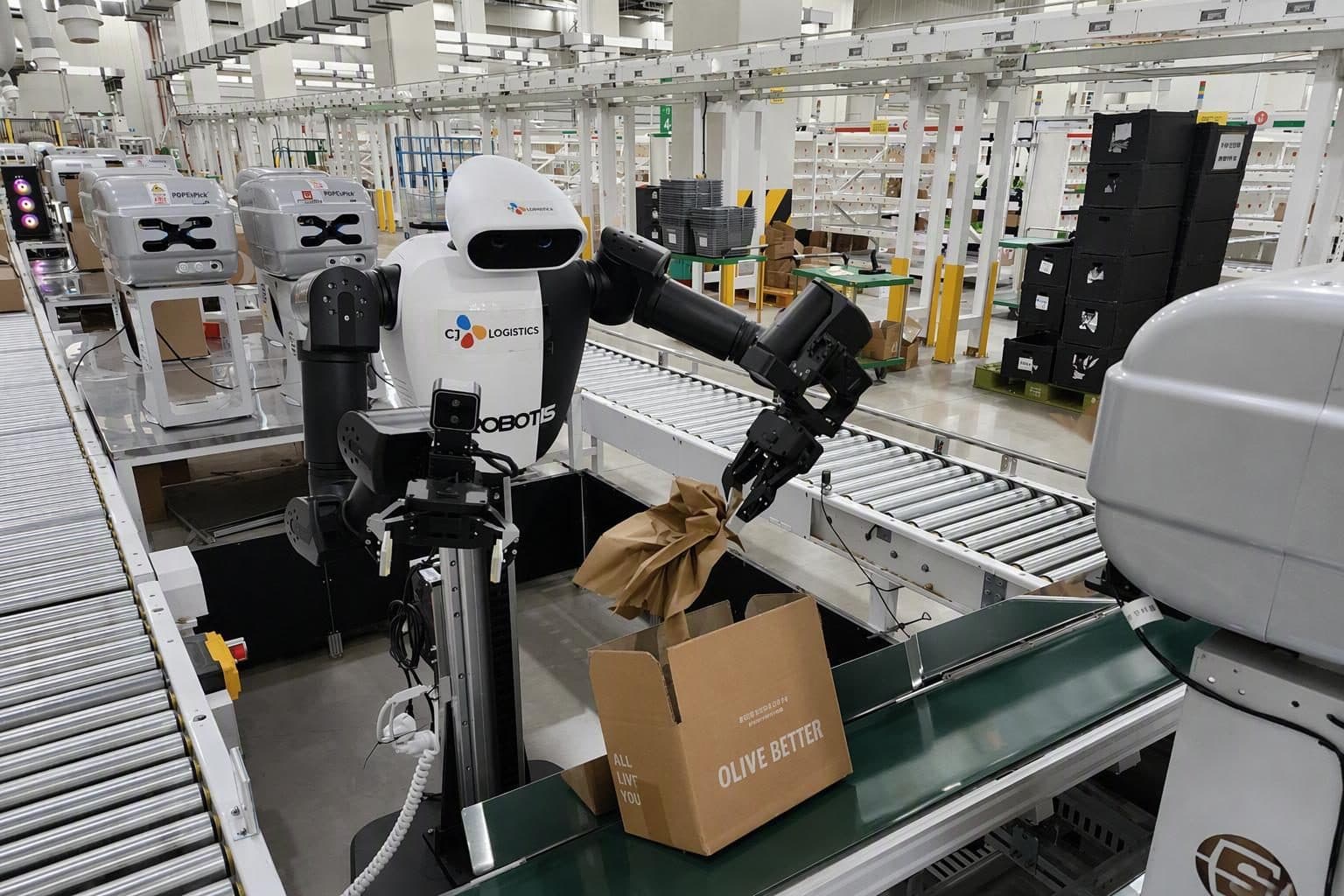
CJ Logistics has put two dual-arm humanoid robots into the packaging process at the Olive Young logistics centre in Yangji, Yongin, handling real customer orders. The company describes it as the logistics industry's first case in Korea of humanoids moving past demonstration into a live operating process.
What the robots actually do
One sub-step. The robots insert cushioning and void-fill material into boxes on the packing line. Human workers finish the pack. This is not a humanoid running a station end to end; it is a humanoid inserted into a single repetitive motion inside a process that remains human-completed.
The stack behind it
Three suppliers, each covering a layer: ROBOTIS for the hardware, Aidin Robotics for the hand, and RLWRLD for the robot foundation model. That division is the interesting part of the deployment. The foundation-model layer is the reason to put robots on a live line at all — real orders generate the varied, messy manipulation data that demonstrations cannot.
What the common framing gets wrong
"Commercialisation" is CJ's own word, and it is being read as "humanoids are now doing warehouse work." What is running is closer to a data-collection deployment wearing a production badge: two units, one task, humans downstream, feeding a foundation model that is the actual product under development. That framing is not a criticism — it is the honest description of where humanoid logistics is, and it explains why the task chosen is the least consequential step on the line. If the robots stop, the packs still ship.
What would make it a milestone
Two numbers nobody has published: throughput against the human baseline for the same step, and uptime across a full shift. Until a deployment discloses those, "first humanoids on a live line" is a statement about placement, not productivity. The next disclosure to watch is whether the task set widens — a second sub-step would say the foundation model is generalising, which is the whole bet.