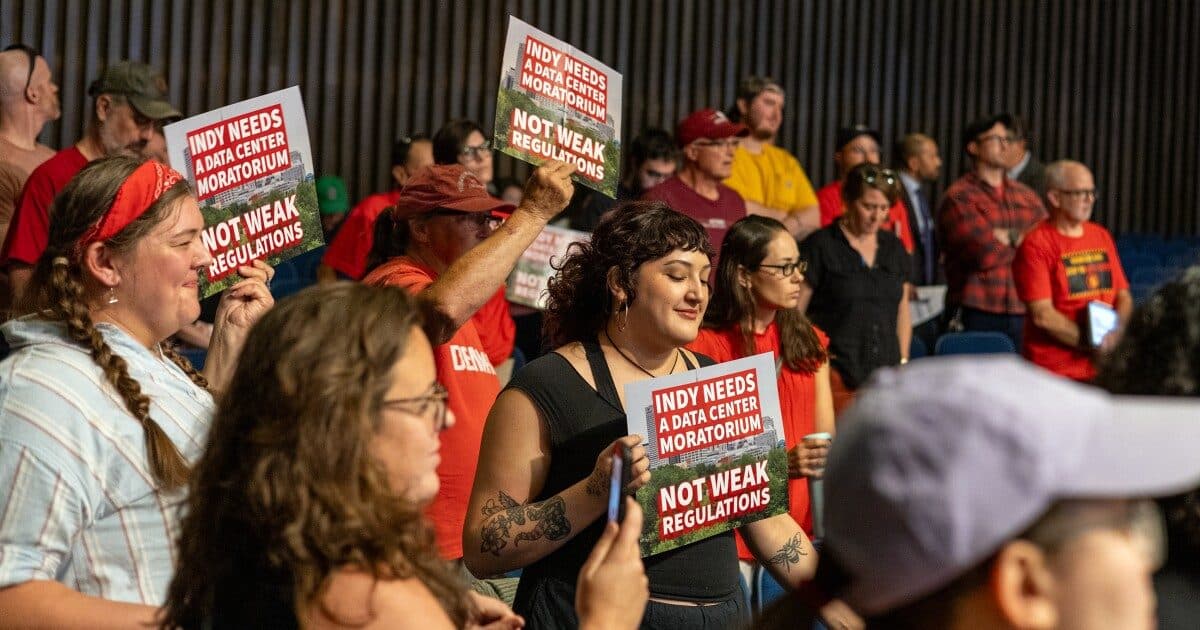
Indianapolis and Marion County's Metropolitan Development Commission voted 6-0 on 19 August to adopt zoning proposal 2026-AO-001, halting approval of new data-centre developments until 31 December 2027. It took effect on adoption.
What the common telling gets wrong
Headlines say Indianapolis banned data centres. It is a temporary moratorium with a hard sunset, adopted expressly to buy time to write standards — not a prohibition and not a position against data centres. Mayor Joe Hogsett has put $150,000 in his 2027 budget for the expert and resident committee that will study campus size, building height, sound levels, low-frequency noise and brownfield issues before new rules are drafted. The output is meant to be a zoning code, not a rejection.
Second, the 19 August vote is being reported as the decision. It is the final procedural step. The City-County Council passed the measure 23-1 on 10 August, and the lone no came from Councillor Michael-Paul Hart (R-District 20). A story that treats the 6-0 as the fight is describing a ratification.
Nothing already approved stops
Three campuses are carved out and proceed: DC Blox in Warren Township, Metrobloks in Martindale-Brightwood and Sabey in Decatur Township. The same commission that adopted the pause is due to consider major tax abatements for Sabey and Metrobloks on 16 September. Coverage implying construction halts in Marion County is wrong on both counts.
The objection on the record
Hart warned the commission that the moratorium effectively defers action until a new city council is seated in 2028, and that developers would be "a lot smarter on this topic than a new group of councilors." Councillor Dan Boots (D-District 3) answered: "I respect Councilor Hart's position. However, that vote was 23-1. He was the sole vote against it." Unanimity at the commission is not the same as consensus in the city.
Why this one travels
Marion County is a genuine Midwest data-centre target, and this is a large municipality putting a dated, enforceable pause on the build-out while it writes noise, water, height and siting standards. That is the template other councils copy — a pause with a sunset and a funded study is far more portable than a ban.