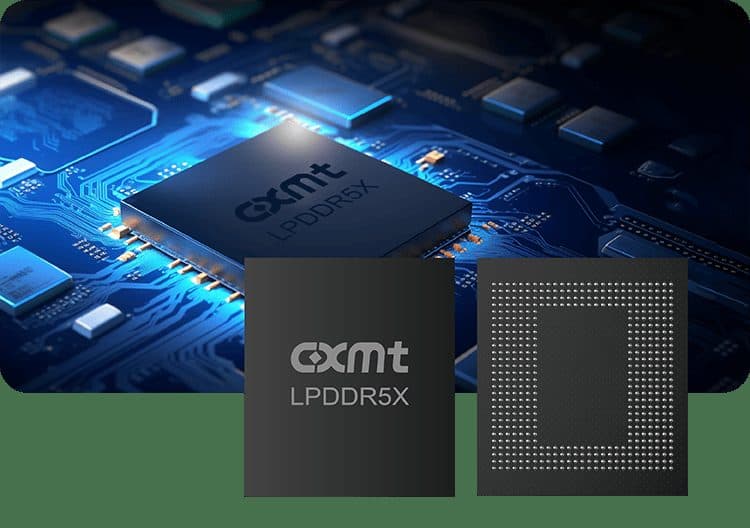
ChangXin Memory Technologies has taken its first LPDDR6 chip to the tail end of R&D validation, Chinese and Korean outlets reported on August 3. The part runs at 12,800 Mbps with a 10,667 Mbps base rate, on a 16-gigabit die packaged as 16GB in a 1,295-ball package-on-package design.
Why the number matters
LPDDR6 is the memory standard aimed at running models on the device rather than in the cloud — AI phones, AI PCs, cars, low-power servers. Bandwidth is the binding constraint on what a local model can do, and the base rate matters as much as the peak, because sustained inference sits closer to the floor than the ceiling.
The gap, stated plainly
Competitors reach 14,400 Mbps on the same standard, using EUV lithography that US export controls keep out of CXMT's hands. That is roughly 11% of bandwidth, attributable to a single tool. The story is being framed as China catching up in next-generation memory; the source says the opposite on the only figure that settles it.
Validation is not shipping
"Nears validation" is being read as availability. CXMT has disclosed no customer and no mass-production date. SK hynix finished development and customer certification of its 16Gb LPDDR6 back in March, with second-half supply planned. Micron began sampling in December; Samsung showed a part at CES without a production date.
The share price is not a measurement
CXMT listed on Shanghai's STAR Market on July 27, raising about 57.9 billion yuan ($8.6 billion), rose 466% on day one and 523% across its first week, and passed ICBC as mainland China's most valuable listed company. That is a reading of domestic-substitution appetite, not of technical position.