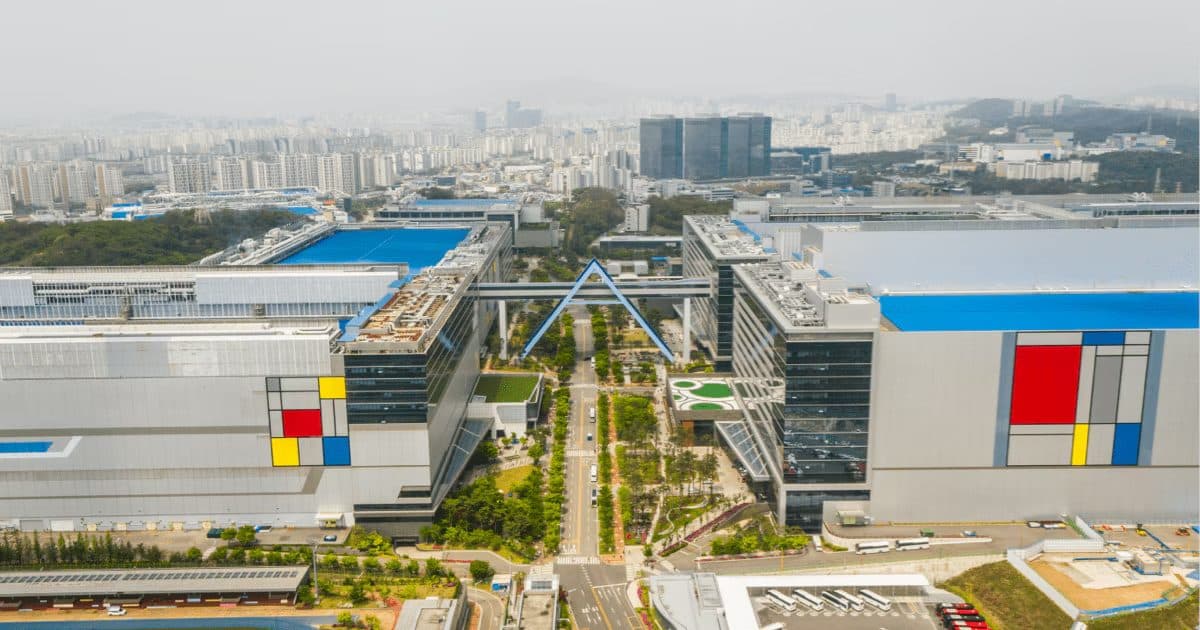
Samsung is converting a cleanroom it stopped using years ago back into production, according to a report from Seoul Economic Daily — and the product it is being converted for is not the expensive kind.
What is being rebuilt
Hwaseong Campus Complex 1 is a roughly 20-year-old line that once produced 2D NAND and has sat idle for three to four years. It is being remodelled into a consolidated end-fab dedicated to commodity DRAM, absorbing end-fab lines from Hwaseong H2 and from Cheonan, in parallel with the company's continuing expansion at Pyeongtaek.
The prices behind the decision
In the first half of 2026, DDR4 8Gb commodity DRAM rose roughly 80% and DDR5 64GB modules about 190%. The mechanism is straightforward: HBM consumes around four times the wafer area of commodity DRAM per bit sold, so every wafer diverted into AI memory removes several from the ordinary market.
The capacity number that is not in the article
Aggregator summaries have attached a figure of 200,000 wafers per month to this story. It does not appear in the report. Neither does a capacity target nor a start date — the piece gives the conversion and the rationale, and nothing quantified about output.
Sourcing
Attribution is to unnamed industry officials. Samsung has not confirmed the conversion publicly, which is normal for fab-planning reporting and still worth stating plainly.
The competitive subtext
The same report notes that Apple is evaluating CXMT as an alternative supplier — the Chinese maker that closed its Shanghai debut on Monday worth roughly $485 billion. Reactivating retired cleanroom space is a defensive move as much as an economic one.