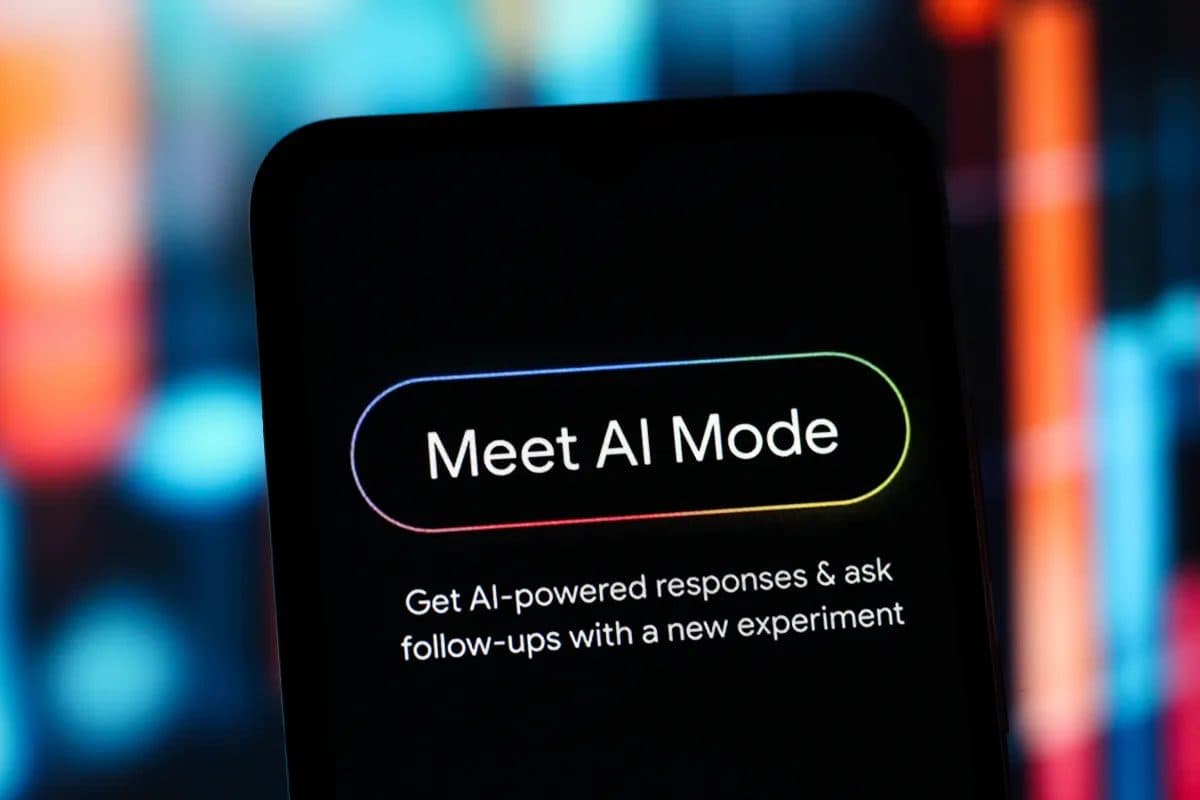
Google Search's AI Mode crossed a line on July 16 — from answering questions to completing tasks — with the launch of Connected Apps, an integration framework debuting in the US with three partners: Instacart, Canva and YouTube Music.
What it does
Once a user links an account, AI Mode can act inside it. Ask for a dinner plan and it can push the ingredient list straight into an Instacart cart. Ask for a party flyer and it generates Canva design templates — pulling the date and details from Google Calendar via Gemini's Personal Intelligence context. Ask for something to match a mood and it assembles a YouTube Music playlist, dropped into the chat feed and openable in the app.
Task completion, not agent theater
Google's framing is deliberately modest: these are structured integrations, not an autonomous agent browsing the open web. That distinguishes Connected Apps from the agentic ticket-booking features Google demonstrated in late 2025 — and makes it more likely to work reliably. The plumbing extends the app-connection capability Google introduced for the Gemini app at I/O 2026, now surfaced where the traffic actually is: Search.
The distribution weapon
Every AI lab is chasing the same goal — an assistant that acts on your behalf — but Google is the only one that can bolt it to a product with billions of daily queries. For Instacart and Canva, the calculus is exposure at Search scale; the risk, as with every aggregator, is that the platform eventually captures the relationship. Google says more partner apps are coming, and it is rolling the feature out across the US this week.
The context
The launch landed the same day Google renamed NotebookLM to Gemini Notebook and shipped personal AI avatars in Vids — a coordinated product barrage that reads as counterprogramming for a week in which rumors of the delayed Gemini 3.5 Pro dominated the conversation. Whatever the flagship model's timeline, the strategy is visible: ship agentic surface area now, everywhere users already are.