Two vulnerabilities in llama.cpp's ggml-RPC server published to the national vulnerability database within an hour of each other overnight on 23-24 August. Both are in the same component. Neither has a fix in the shipping tree.
The serious one
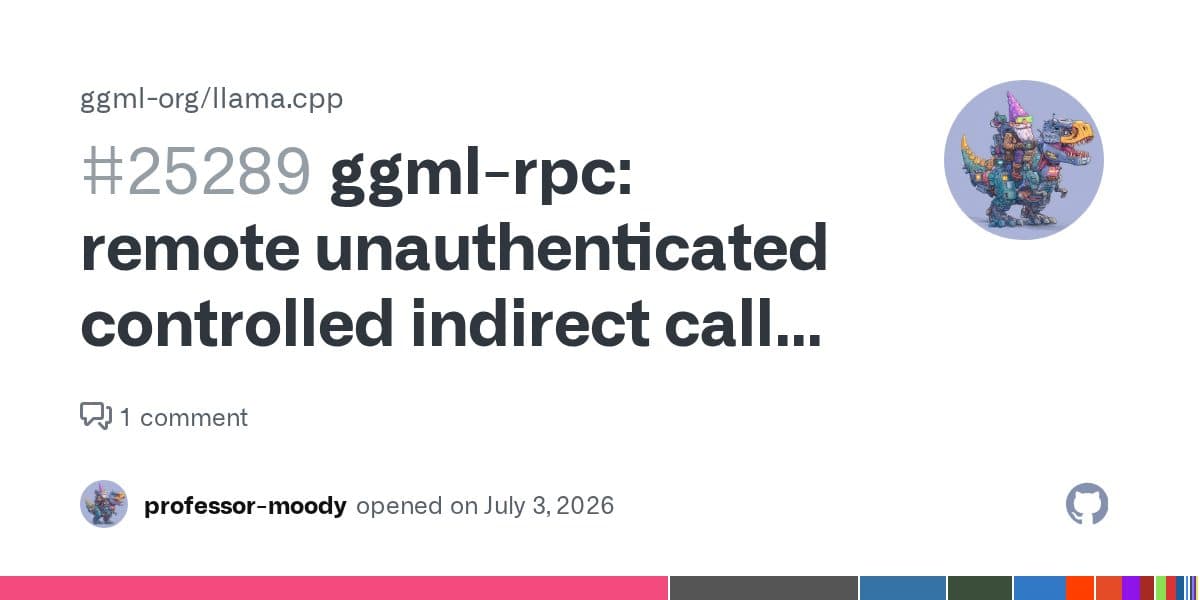
CVE-2026-78147, published 23 August at 23:16 UTC, is in the deserialize_tensor function. The server reads op and op_params off the wire without validating them. For a custom operation, that structure contains a function pointer — which then gets called. The database is explicit that this is distinct from an earlier CVE, which added only a buffer check and did not validate the operation fields. The RPC server needs no authentication.
The second one, and its 41-day fix
CVE-2026-78148, published 24 August at 00:16 UTC, is a null pointer dereference in rpc_server::graph_compute, remotely triggerable. It is the milder of the two, and it is the one with a fix — a pull request opened on 14 July that was still unmerged when the CVE published 41 days later.
What the common framing gets wrong
These will be reported as "medium severity" because that is the badge attached to both. That badge follows the newer CVSS 4.0 scale, which puts both at 6.9 — the identical score for a remote controlled indirect call and a null-pointer crash, which should itself invite suspicion. On the older CVSS 3.1 scale the same assessor separates them properly: 7.3, in the high band, for the function-pointer issue and 5.3 for the crash. The scores are not in conflict; they are different scales, and the one being surfaced happens to be the one that flattens the distinction.
The part that is not about scoring
The issue behind the more serious CVE was reported on 3 July and closed on 18 August with the reason not_planned — an inactivity auto-close, five days before the vulnerability was published. Neither of these was an unknown flaw. Both were in the tracker, and the tracker moved on.