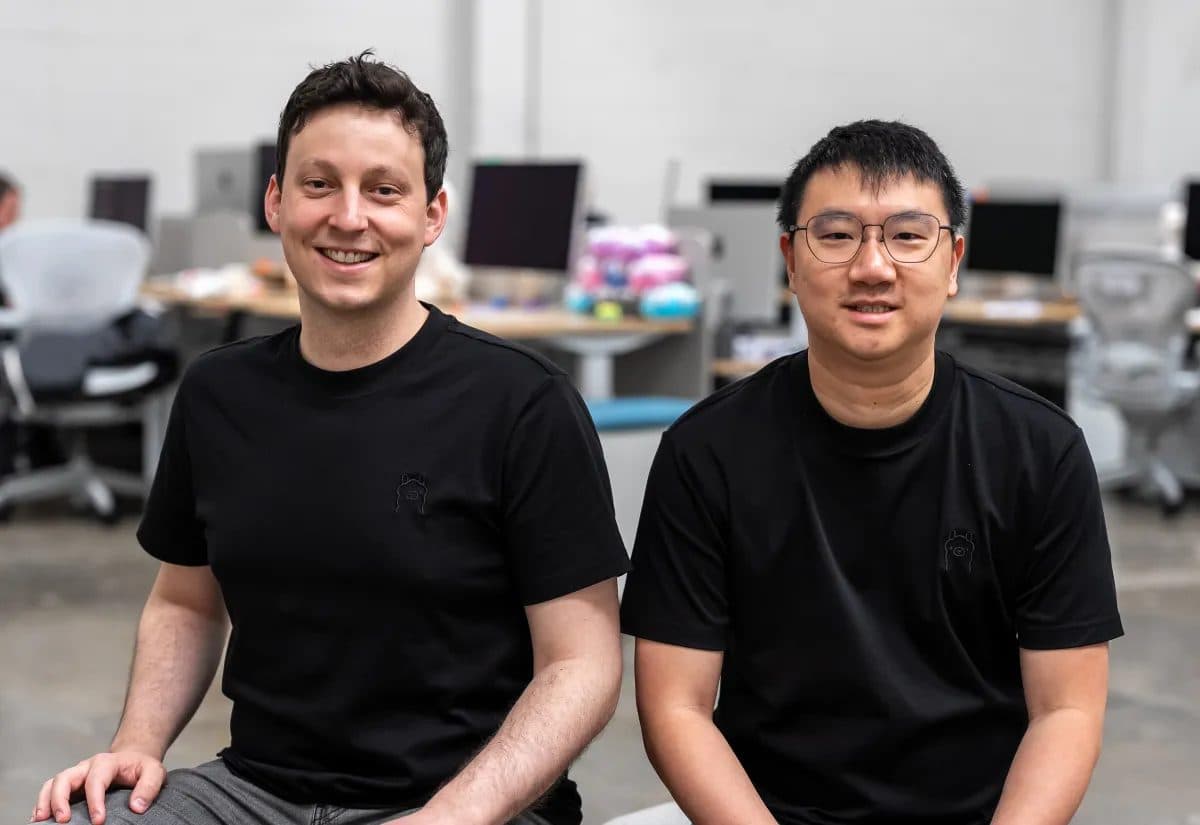
The company that made it trivial to run an AI model on your own laptop has become a venture-scale bet on what inference costs. Ollama said on July 9 that it raised a $65 million Series B led by Theory Ventures, with Benchmark, 8VC, Y Combinator and Pace Capital joining. Total funding now stands at $88 million. No valuation was disclosed.
The numbers behind the round
Ollama reports 8.9 million monthly developers — roughly double its count in January — with about 1 million new installs a week and 176,000 GitHub stars. It says the tool is used inside 85% of the Fortune 500, including regulated industries where sending data to a third-party API is a compliance problem rather than a preference. The company that supports all of this has 14 employees.
Why now
Founders Jeff Morgan and Michael Chiang previously built Kitematic, the container GUI Docker acquired and folded into Docker Desktop — the same trick applied twice, wrapping a hostile local toolchain in something a developer can run in minutes. "Open models started coming out in 2023 but they were really hard to use," Morgan said. The growth inflection came around January, when open-weight models grew capable enough at coding-class and agentic tasks that running them locally stopped being a hobbyist exercise.
The economics argument
That is the investment thesis, stated plainly by Benchmark partner Peter Fenton, who led Ollama's earlier $15 million Series A and sits on its board. "It's not an either/or," Fenton said. Every company with high inference expenses, he argues, has a "vital existential project" pushing it toward open-weight models. Fenton also called the ability to build a product that reaches developer ubiquity "extremely rare." Ollama's business is Ollama Cloud, with tiers running from $0 to $100 a month, billed by GPU time rather than tokens — a pricing model that reads as a direct rebuttal to per-token APIs.
The competitive frame
The round lands the same week frontier labs cut prices to defend enterprise budgets, with Meta pricing its first paid model at roughly a quarter of OpenAI and Anthropic rates. Ollama's wager is that some share of that spend never reaches an API at all — it runs on hardware companies already own. The company has not disclosed a valuation for the round, and its 14-person headcount is both the proof of leverage and the obvious question: distribution at this scale eventually demands support, security review and enterprise contracts, none of which run on GitHub stars.