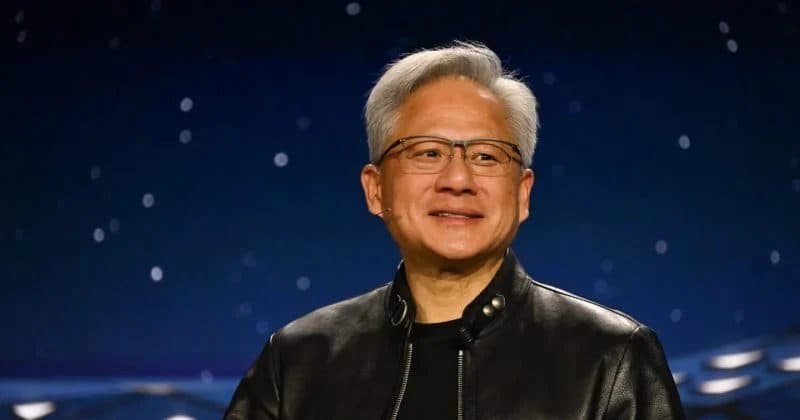
Nvidia chief executive Jensen Huang put himself directly at odds with the Trump administration and with his own biggest customers on July 22, telling Axios that Chinese open-weight models are good, safe to use, and should not be banned.
What he actually said
"These Chinese models are excellent," Huang said, adding that "open-source models that are excellent should be used." Asked whether American companies should be allowed to use them, he said "absolutely." He dismissed as a "misconception" the argument that downloading a Chinese model opens a backdoor to Beijing, noting that companies can customise the weights and control access inside secure sandboxes — and argued that openness makes AI more secure, because outside researchers can inspect models and build defences.
The Kimi panic he is answering
The context is Kimi K3, the 2.8-trillion-parameter open-weight model from Beijing-based Moonshot AI unveiled at Shanghai's WAIC on July 17. Near-frontier performance at far lower prices set off the sharpest AI selloff since DeepSeek in January 2025. David Sacks called K3's benchmarks "concerning" and Bill Ackman agreed. Huang's verdict: Wall Street "misunderstood the impact of Kimi again this time."
The incentive worth naming
Huang's argument is not disinterested. Cheaper open models widen access to AI, which increases demand for the chips, data centres and compute Nvidia sells. More inference of any origin is good for Nvidia.
Against his own customers
The position also cuts against OpenAI and Anthropic, both major Nvidia buyers, which have accused Chinese rivals of siphoning capabilities and warned that Beijing's open-source push threatens the American lead. Separately, Bloomberg reported the same day that Chinese models are approaching a record 60% share of tokens routed by US firms on OpenRouter — up from under 10% at the start of 2025.