Residents of Effingham County, Georgia protested outside the county administrative complex in Springfield on Saturday 29 August while commissioners held a work session inside on Project Camellia, the roughly $20 billion OpenAI data-centre development announced in July. WTOC's report is timestamped 30 August at 04:16:49 UTC.
What happened in the room
The session ran nearly three hours and took questions on noise, water use, electricity demand, emergency services and transparency. At least one commissioner acknowledged the county could have done more to keep residents informed. Some residents asked for a temporary moratorium on future data-centre projects; commissioners said they would consider it. Outside, protesters held signs demanding scrutiny. It is at least the latest in a series of protests since the July announcement.
What the headline word "forward" conceals
No vote was taken. Nothing was approved, denied, conditioned or scheduled. A work session is a hearing, and the project remains in the development phase — which means "moves forward" describes the passage of time rather than any decision. The moratorium is not pending either: "we will consider it" is not a first reading, and a first reading would not be an ordinance.
The lever is not in the county's hands
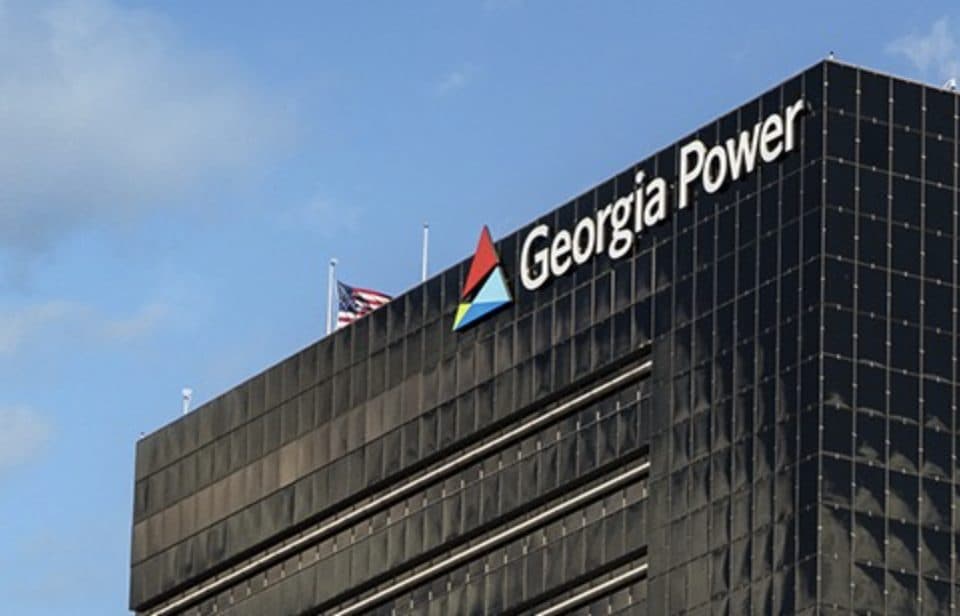
This is the part that reframes the whole meeting. The electricity demand residents spent Saturday asking about runs through a supply arrangement with Georgia Power, reviewed by the state Public Service Commission — a separate process at a different level of government, whose deadline for the project's 3.2-gigawatt contract fell on 25 August, four days before the session. County commissioners do not vote on that contract. They can zone, condition and permit; they cannot set the load.
And $20bn is an announcement, not a schedule
The figure attached to Project Camellia is announced private investment across four buildings on a site in the Savannah Gateway Industrial Hub. It is not committed capital with a drawdown timetable, and it is not energised capacity. Residents quoted by WTOC framed their objection in exactly those terms — Zach Springer said what he sees is "a bunch of billion-dollar companies all trying to rush massive expansions just to compete with the other AI company."