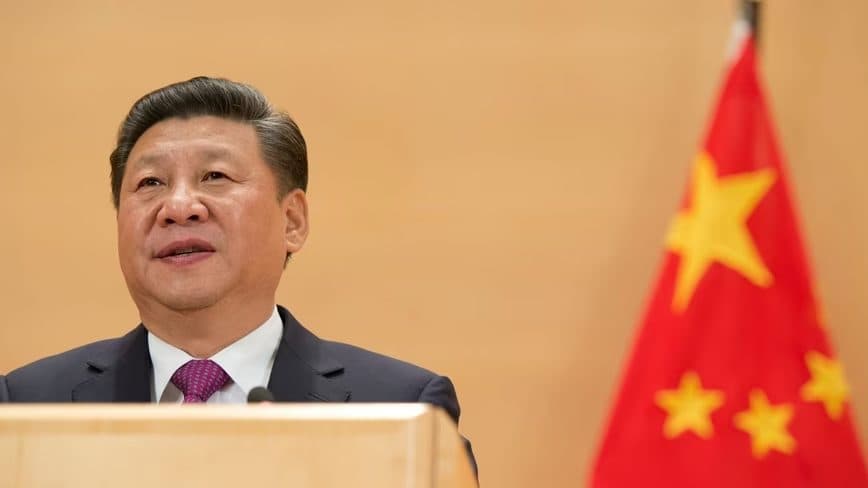
China is turning its marquee AI event into a head-of-state affair. On July 13, 2026, the Chinese foreign ministry announced that President Xi Jinping will attend the opening ceremony and deliver a keynote at the 2026 World Artificial Intelligence Conference (WAIC) in Shanghai, held July 17–20. It is the first time Xi has personally headlined the conference.
A presidential upgrade
The billing is a pointed step up. In 2025, Premier Li Qiang fronted WAIC and used the stage to warn against AI "monopolies" — a jab at US dominance. Elevating the event to Xi himself signals how central Beijing now considers AI to national strategy, and guarantees the keynote will be read as policy, not industry cheerleading.
The bigger play: a rival institution
Analysts expect Xi to use the speech to define a World AI Cooperation Organization — a proposed intergovernmental body China has been openly promoting and wants headquartered in Shanghai. The pitch is aimed largely at the Global South: an alternative pole of AI governance and access to counter US-led rules and export controls, with China positioning itself as the open, cooperative option.
What's on the floor
The exhibition backs the ambition with scale. This year's WAIC is the biggest on record — more than 1,100 companies, over 3,000 exhibits, 300-plus global debuts and a floor topping 100,000 square meters. Expected unveilings include Huawei's Atlas 950 compute system, a ZTE "AI agent" phone and MiniMax's M3 multimodal model — a showcase of a domestic stack built increasingly without American parts.
Against the US backdrop
The timing sharpens the message. The summit opens weeks after Washington tightened frontier-model oversight and reshuffled chip-export tiers, and as Chinese labs lean on Huawei Ascend silicon to route around Nvidia curbs. Paired with the conference's High-Level Meeting on Global AI Governance, Xi's appearance frames AI not just as a technology race but as a contest over who writes the world's rules for it.