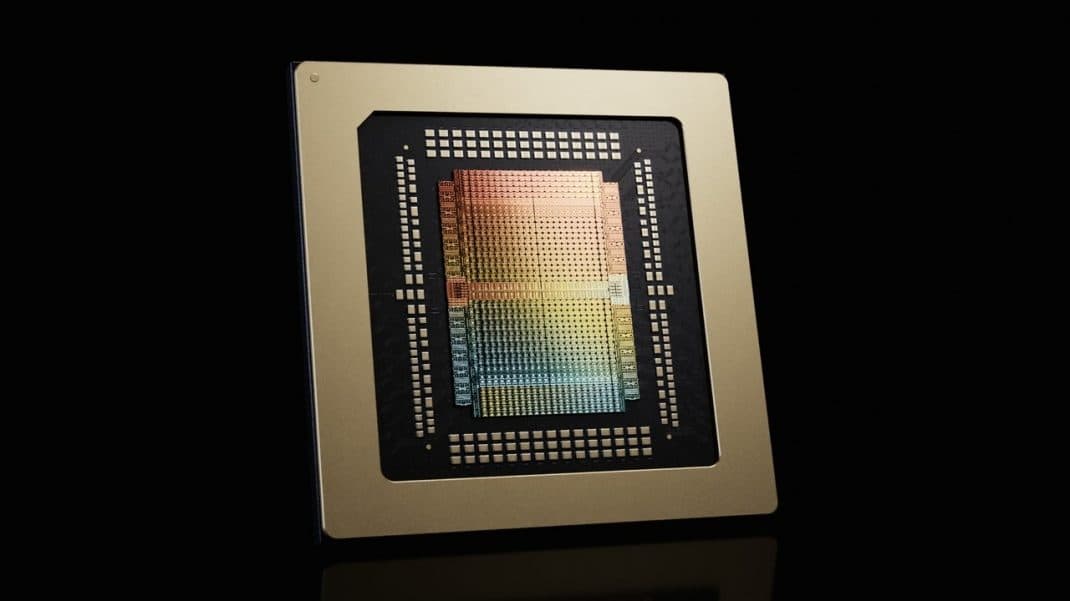
Korean business press reported on Tuesday that Samsung Foundry has reached stable mass production of Nvidia's Groq 3 inference part on its 4nm process at the S5 line in Pyeongtaek, with yield rising from roughly 33% in April 2026 to over 80%.
What the conventional framing gets wrong
Three things. First, this is not an announcement. Neither Samsung nor Nvidia issued anything; it is a supply-chain report sourced through Korean business media, and it should be read at that confidence level. Second, one outlet writes that Nvidia has begun mass production while the originating report says Samsung reached stable mass production. Those are different events, and the gap between them is months: production itself started earlier, with shipments previously flagged for the third quarter. A yield-stabilisation milestone is being reported as a start-of-production milestone. Third, coverage renders the part as "Groq 3 LPU" and "Groq 3 LPX" interchangeably, which is not a trivial slip when the whole story is about which specific device is running on which line.
The number underneath the number
Samsung has raised 4nm foundry prices by up to 15%. That is the yield story expressed commercially: a foundry running at a third yield has no pricing power, and a foundry running above 80% does. Volume is reported at roughly 10,000 wafer starts per month, with more than 15,000 expected in 2027.
Why Samsung needs this specific customer
Samsung Foundry's problem has never been process capability in the abstract; it has been convincing the largest customers that yield will hold at volume. A stabilised high-yield line running an Nvidia part is the single most useful reference it could have — and it lands while TSMC's advanced capacity remains the binding constraint on almost everyone's AI silicon roadmap. A credible second source at 4nm changes the negotiating position of every buyer in the market, not just Nvidia's.
How firm is this
Medium. The figures are consistent across three Korean and Taiwanese outlets reporting the same day, but they trace to supply-chain sourcing rather than to either company, and no one has put a name to the yield measurement methodology.