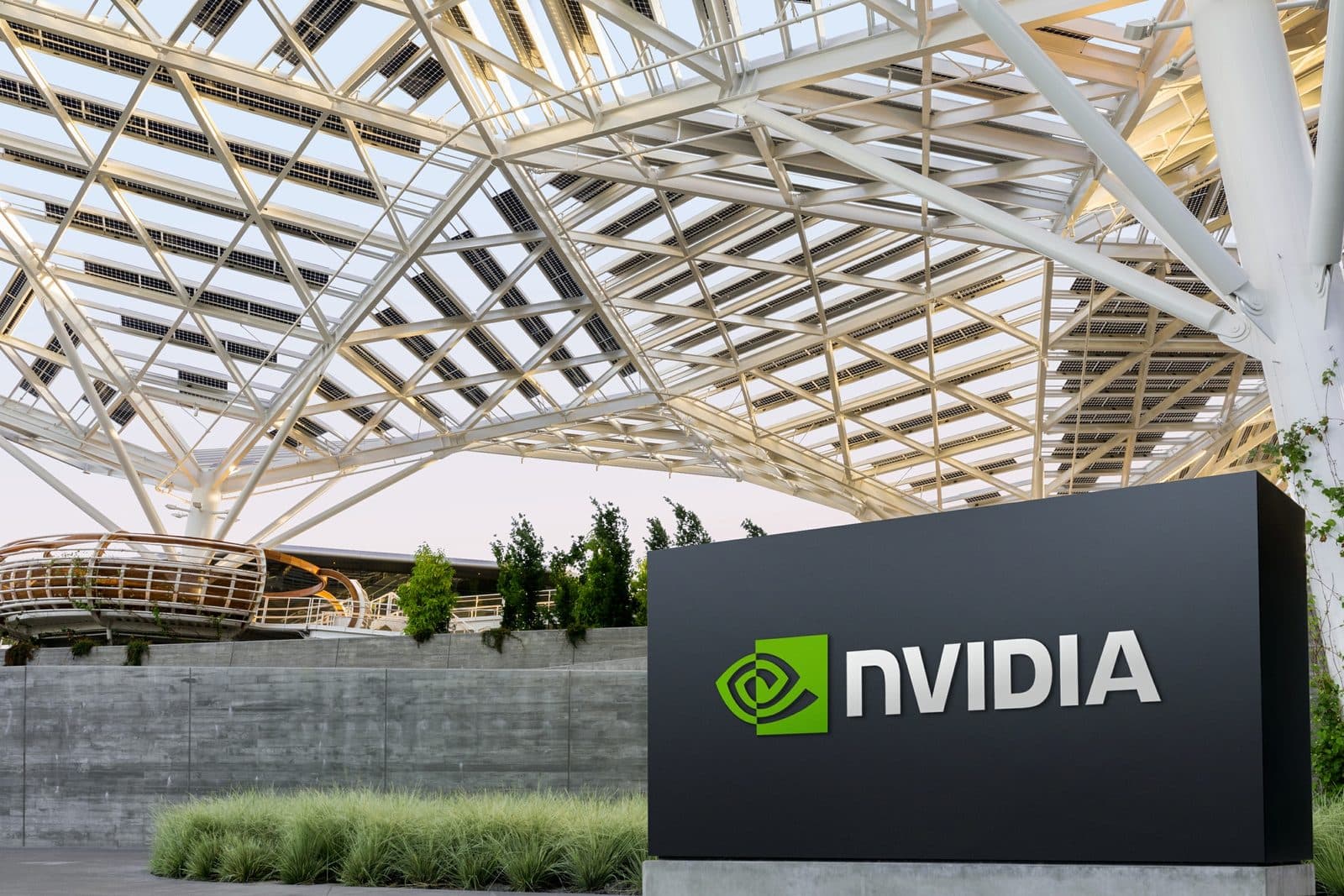
Nvidia said on 10 August that it has agreed with Apollo, BlackRock, Blackstone, Brookfield, Goldman Sachs and KKR to establish compute-infrastructure financing platforms intended to mobilise more than $500bn of third-party capital for AI buildouts.
What the platforms are for
Each is described as an independent vehicle, created jointly with Nvidia, that funds data centres, power and AI infrastructure across Nvidia's customer base — frontier labs, enterprises and AI clouds — including the rollout of what Nvidia calls DSX AI factories. Jensen Huang says he approached only these six firms and that none declined.
The word doing the work is "MOU"
Nvidia's own release states the arrangements are subject to execution of the final agreements. There is no committed capital, no closing date, no named first transaction, and no disclosed split between GPUs, data-centre shells and generation capacity. The $500bn is a mobilisation target "over time" rather than a fund size.
Why a chip vendor is arranging debt
Nvidia's constraint is no longer wafer supply; it is whether buyers can finance multi-gigawatt sites. Routing outside capital toward those buyers expands the addressable order book without Nvidia carrying the exposure. It also does not appear on Nvidia's balance sheet: the company discloses no capital contribution of its own and does not control the platforms.
What to watch instead of the headline
The number that will matter is the first funded transaction under any of the six — its size, its counterparty and its cost of capital. Until one prices, the half-trillion figure is a statement of intent by seven parties, not a market.
The unanswered terms
The release does not explain how a platform decides which buyer qualifies, what collateral a GPU cluster represents against a multi-year loan, or who carries residual risk when an accelerator comes off lease three refresh cycles into its life. Those are the terms that determine whether $500bn is financeable, and none of the seven parties has published them.