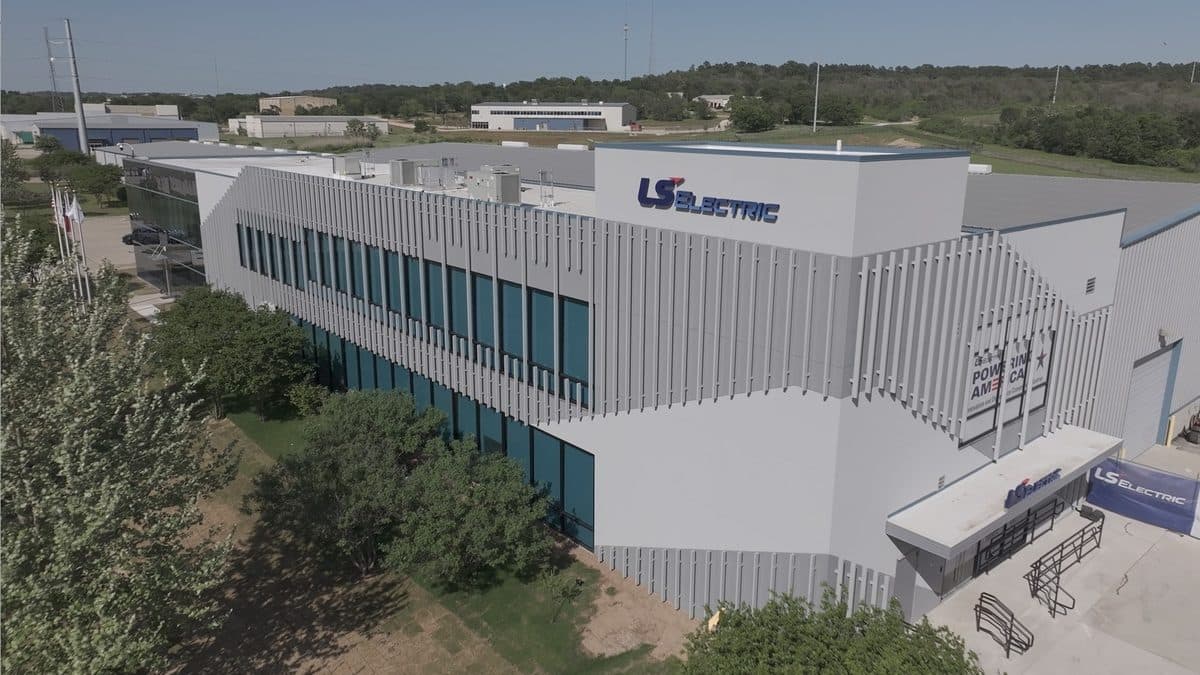
LS Electric disclosed on the morning of 24 August, Korean time, that its contract to supply power infrastructure for a US AI data-centre project has grown to about 230.9bn won, or $165.7m. The scope covers a 38kV high-voltage distribution system, with equipment manufactured through the company's US operations in Utah and Texas.
What the common framing gets wrong
Three things, all of which change the size of the story. First, this is not a new order. It is an amendment to an agreement whose previous value was about 106.4bn won ($70.4m), so the incremental award is roughly $95m, not $165.7m — the larger figure is the running total. Second, it was disclosed on Monday, not signed on Monday; the contract term is backdated to 8 June 2026 and runs to 30 January 2027. Third, it surfaced because it crossed a percentage-of-revenue disclosure threshold on the Korea Exchange. That makes the number a reporting floor rather than a measure of the company's AI exposure — orders below the threshold never appear at all.
What switchgear does and does not tell you
A 38kV distribution system is inside-the-fence equipment: it moves power around a campus once the power is there. It carries no information about interconnection queue position, no signed power purchase agreement, and no energised megawatts. A reader trying to infer the size of the underlying data centre from this contract has nothing to work with — the customer is not named, the site is not named, and the capacity is not stated.
Why it is still worth reading
Because it is a document rather than a press release. A disclosure filed against a regulatory threshold, with a term, a counterparty type and a value, is a harder fact than the megawatt announcements that dominate this sector. LS Electric attributes the expansion to delivery performance on the first tranche, which is the ordinary commercial explanation and the likely one.