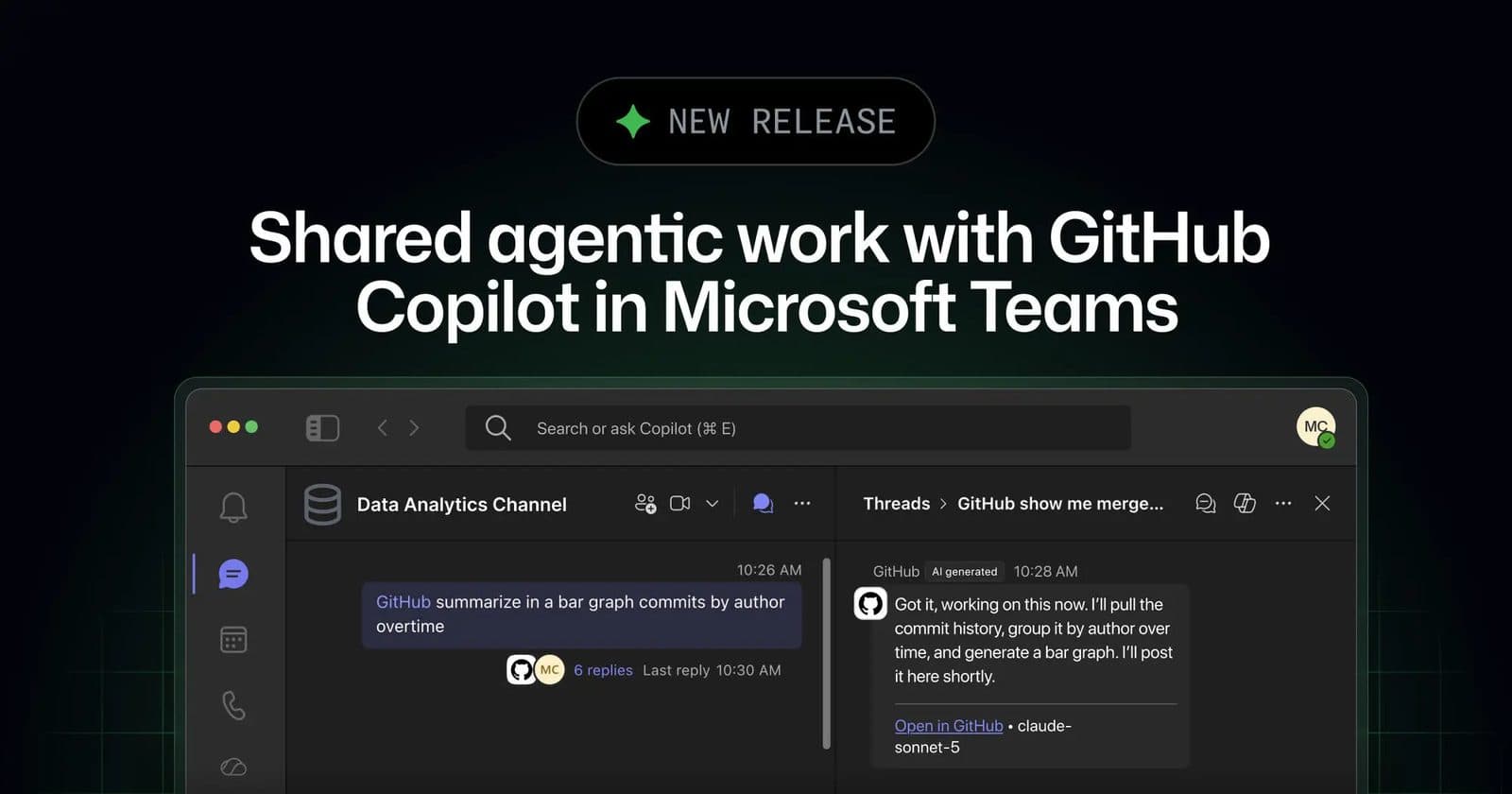
GitHub published two changelog entries on 21 August, at 16:03 and 16:07 UTC, putting its Copilot cloud agent — the one that works asynchronously and opens pull requests, not the chat sidebar — into Microsoft Teams and into Slack. In both, the agent is summoned with @GitHub from the conversation where the work is already being discussed, and runs in what GitHub calls a secure cloud sandbox.
What the common framing gets wrong
"Copilot is now in Teams and Slack" flattens three separate qualifiers. Both are public preview, which carries no availability commitment. The Slack integration is restricted to Copilot Business and Copilot Enterprise — not Pro or Pro+ — which most people holding a Copilot licence are not on. And the Teams entry is explicit that cloud agent sessions started there consume AI credits, governed by organisation usage-based billing budgets, with cloud sandbox usage billed separately again. A chat-shaped feature arrives carrying two meters. The Slack entry uses different language — usage counts against existing Copilot entitlements and existing cloud agent budgets — so the two surfaces are not documented identically and should not be described as if they were.
The admin controls are the new part
Nothing works until an administrator switches on the Copilot cloud agent policy and cloud sandboxes. Inside a thread, anyone in the conversation can ask questions, add context and help plan — but only participants with write access to the repository can trigger Copilot to make changes. Repository admins can additionally require extra approval before a pull request attributed to the Teams or Slack Copilot identity is merged. These are the first concrete controls for an agent invoked from a chat room by people who may not have commit rights.
Where the meter moved
The shape here is worth naming: the agent moves to where the humans already are, the code stays in the vendor's sandbox, and billing moves from per seat to per run. A seat price is predictable; a credit balance consumed by whoever in a channel decides to hand off a task is not. That is a procurement change dressed as an integration announcement.
The half nobody is covering
Slack has drawn the attention because Slack made its own announcement about coding agents in channels. The Teams entry is the one with the credit language in it, and Teams is where the enterprise seat base actually sits.