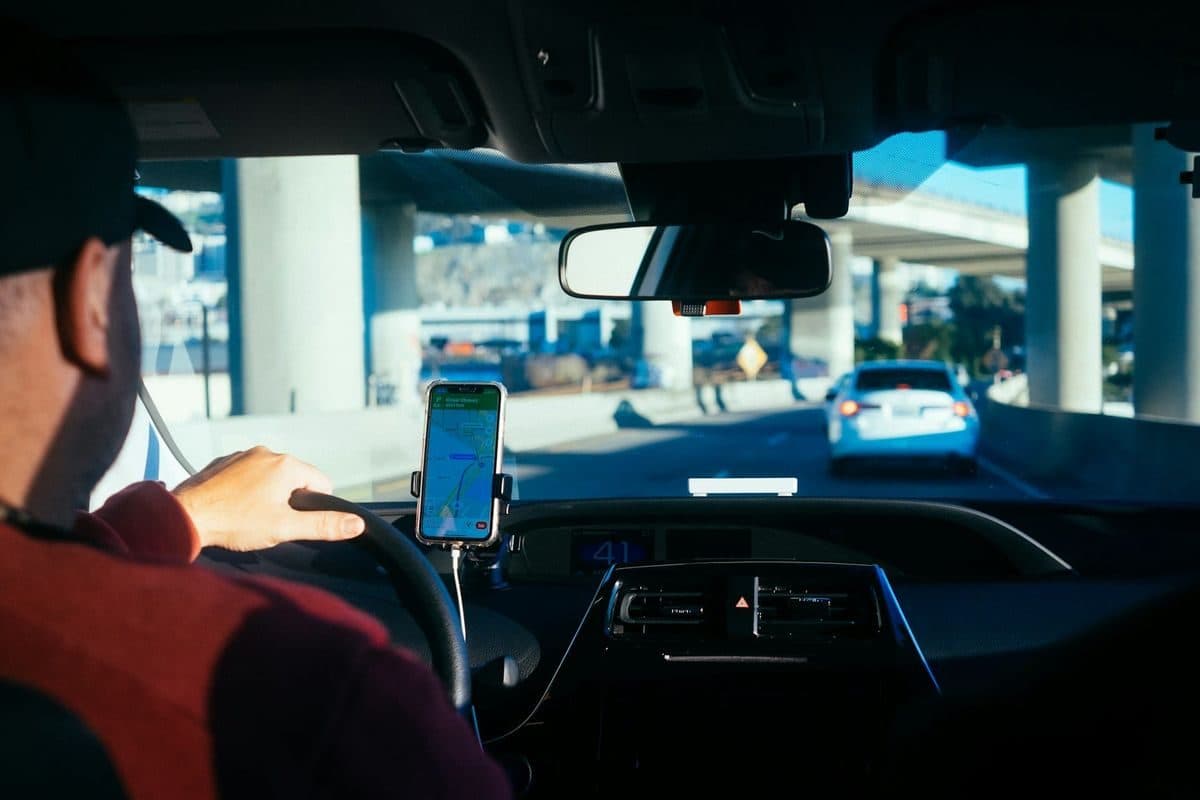
A presentation that surveillance company Flock prepared for the Georgia Office of the Attorney General describes police access to a "Nexar partnership which includes 350k Uber/Lyft and other delivery service devices". The document was obtained through a public records request and published on 7 August.
What was actually new
The presentation itself is dated August 2025. The event is its publication: Dunwoody, Georgia resident Jason Hunyar filed the records request that produced it. Flock announced nothing this week.
Read 350,000 carefully
That is the device count Flock told a prospective government customer was available through Nexar — not a count of cameras answering police searches. The gap between a partner's installed base and a queryable surveillance network is the whole distance between a sales deck and a capability, and the document does not close it.
The drivers own the cameras
Nexar dashcams are bought by individual drivers, not issued by the platforms. There is no evidence Uber or Lyft as companies agreed to any of this, and neither responded to requests for comment. The people whose cameras are being counted are gig workers who bought a dashcam to protect themselves in a collision.
Beyond the poles
The same presentation claims hundreds of Georgia commercial businesses and homeowners' associations are already in the network. Automated licence-plate recognition began as fixed cameras on poles at known locations, which is what makes it possible to argue about: a council can count the poles, site them, or vote them down. A roaming fleet has no locations to publish and no installation to approve.
Why a sales deck is still evidence
Nothing here proves the 350,000 devices were ever queried by police. What it does show is what Flock believed it could offer a state attorney general in August 2025 — and a capability pitched to a prospective government customer is a reasonable description of what a vendor is building toward.