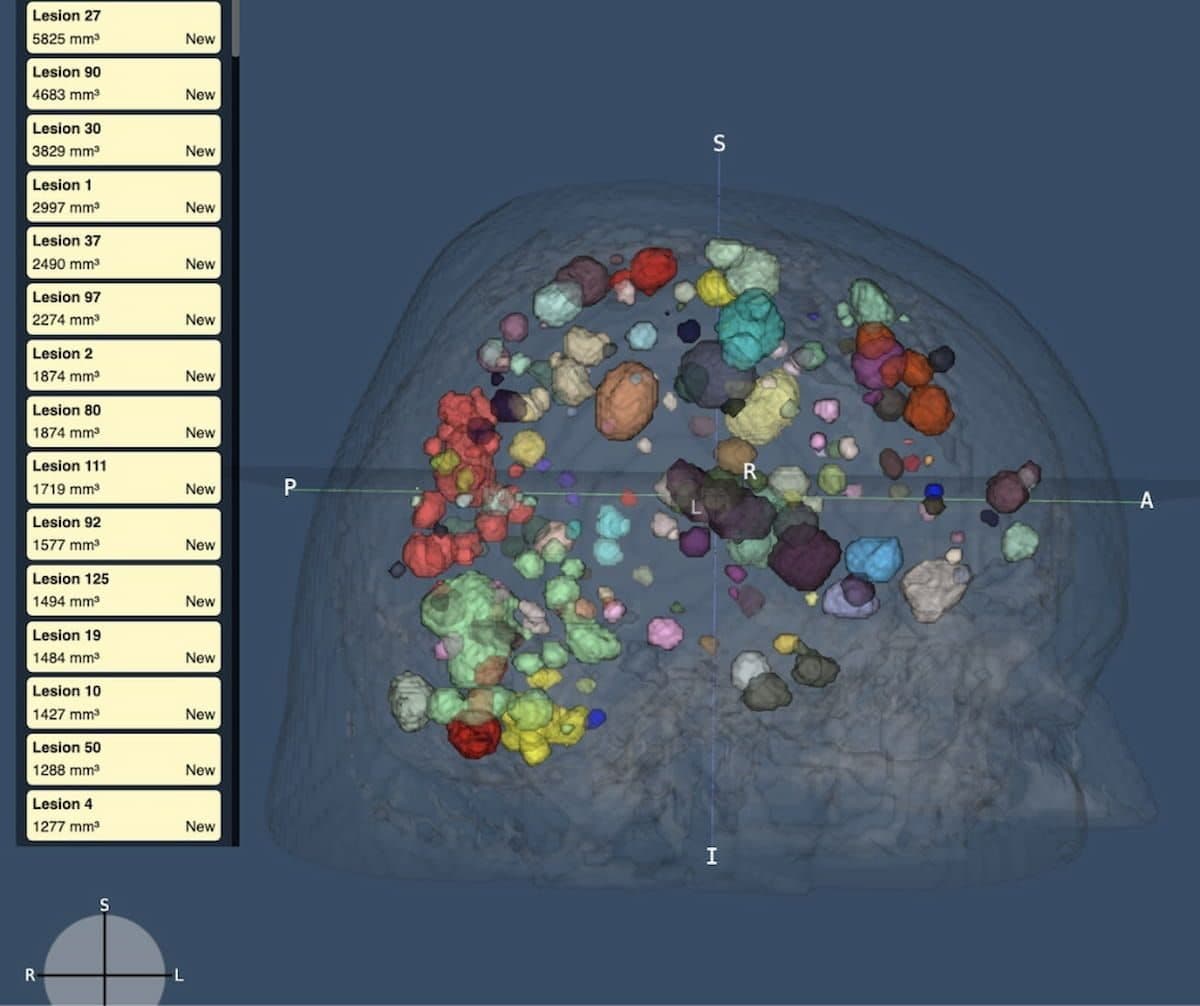
The US Food and Drug Administration has cleared a cluster of AI tools for reading brain MRI scans, the latest sign that radiology remains the busiest arena for medical AI. The new 510(k) clearances cover software that detects, measures and outlines brain tumors and metastases — tasks that are time-consuming and prone to variation when done by hand.
What the new tools do
Among them, Neosoma's Brain Mets software speeds the identification, measurement and contouring of brain metastases from routine MRI, while a companion tool, Neosoma HGG, targets the assessment of high-grade gliomas. Separately, Cercare Medical won clearance for Oncology Virtual Expert, which provides semi-automated segmentation of brain tumors as an alternative to manual contouring that can vary between readers.
These tools are adjuncts, not replacements — they assist radiologists rather than deciding on their own. Their value is in speed and consistency: automating the measurement work that shapes treatment planning and follow-up in neuro-oncology.
Radiology keeps its lead
The clearances fit a well-established pattern. Radiology accounts for the large majority of FDA-authorized medical AI — of roughly 1,357 such devices listed as of January 2026, imaging software made up about 77%. Brain MRI has become a particularly active niche, with multiple vendors clearing segmentation and detection tools in quick succession.
The concentration reflects where AI fits most cleanly into clinical work today: structured imaging tasks with clear ground truth, where a model's output can be checked against the scan. It also means hospitals are absorbing a steady stream of narrowly scoped tools rather than a single sweeping system.