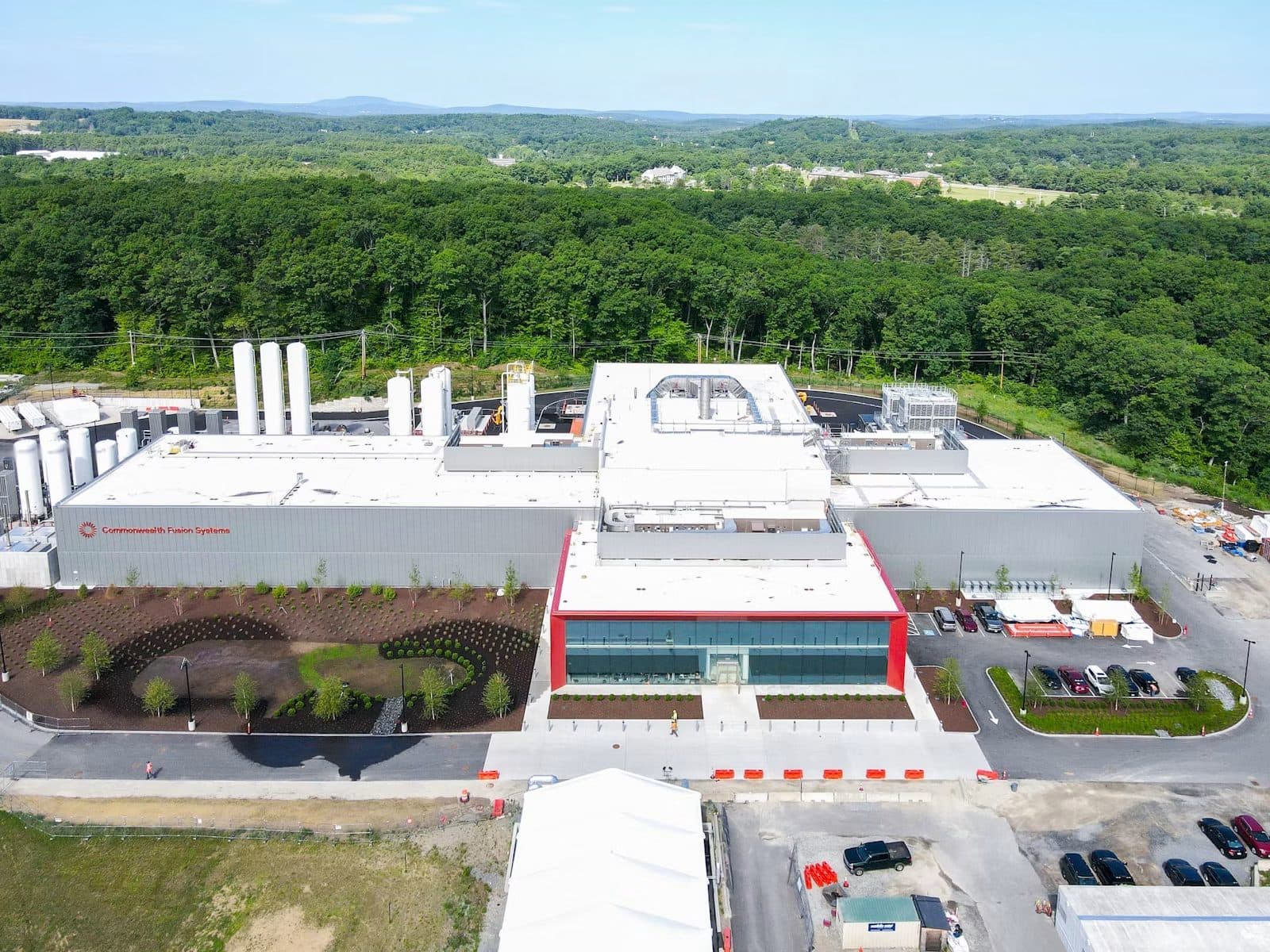
Commonwealth Fusion Systems announced on Thursday that it has raised another $1 billion, taking its total to $4 billion — by its own account roughly 30% of all capital ever raised by the fusion industry, and the largest fusion round since the $1.8 billion Series B in 2021. The money funds completion of SPARC assembly and work on ARC, the plant planned for Chesterfield County, Virginia.
Two absences in the release
The announcement names zero investors in the round. It lists categories — "pension funds, sovereign wealth funds, infrastructure investors, and industrial corporate partners" — which is unusual for a raise being promoted as the largest in its sector. Google and Eni are named, but as existing investors, not participants here.
The second absence is more consequential: there is not a single megawatt figure in the entire announcement. Google has signed power purchase agreements to buy "more than half the power the plant will produce" — a fraction of an unstated quantity, from a plant that does not exist. From the primary source alone, the commitment cannot be quantified. There is no interconnection position, no permit and no queue reference anywhere in the text.
What the timeline actually says
SPARC assembly is "underway", with no completion date given. ARC is "on track to put power on the grid in the early 2030s". Coverage collapsing Google's dual role into the single label "Google-backed" is also worth resisting: being an equity investor and being the offtake customer are different exposures, and here Google is both.
Where this sits in the AI power stack
Fusion is now being underwritten by pension and sovereign money on the strength of hyperscaler power purchase agreements for electricity that cannot arrive before the 2030s. That is the longest-dated bet in the entire AI energy complex — and the disclosure quality here is markedly thinner than in the gas and nuclear deals it competes with, where megawatts, queue positions and counterparties are routinely named.