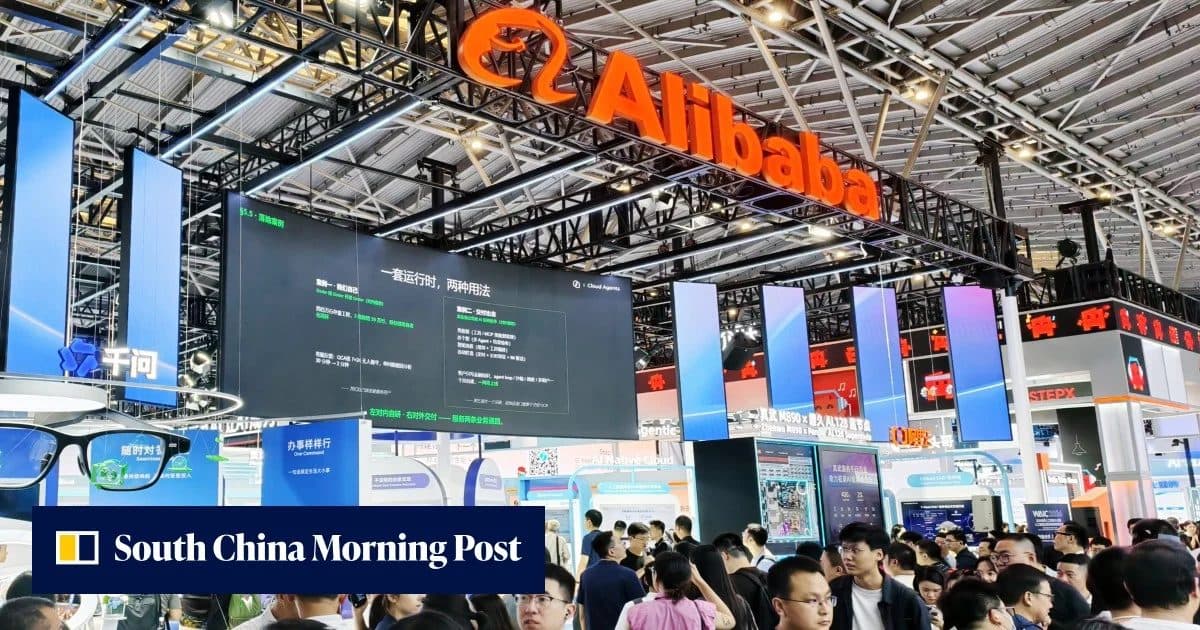
Alibaba told the Hong Kong market on Sunday that it intends to place newly issued ordinary shares with investors outside the United States, targeting aggregate placing consideration of HK$80 billion — roughly US$10.2 billion. The company said 100% of net proceeds are intended for investments in its “full stack AI capabilities, including expanding and enhancing AI infrastructure”. Completed, it would be the largest primary follow-on offering ever by a Hong Kong-listed company, and the third largest anywhere this year after Alphabet and Intel.
What the announcement actually contains
Three things and a disclaimer: the HK$80 billion target, the Regulation S structure limiting placees to non-U.S. persons outside the United States, and the allocation of proceeds. It also says plainly that there is no assurance the Equity Placement will be completed.
What it does not contain — and what everyone is quoting
The figures driving the coverage are not in it. The 710 million shares, the HK$112.70 price and the 3.6% discount to the last close come from a term sheet reviewed by Reuters. So does the reporting that banks had taken indications of interest above deal size. A term sheet circulated to institutions during bookbuilding is a live document: a placement can reprice or resize between term sheet and settlement. Reading “Alibaba raised $10.2bn at a 3.6% discount” as settled fact treats a bookbuilding parameter as an outcome.
The currency trap
Headlines put the deal at $10 billion, $10.2 billion and $13 billion. The last is not a competing estimate — it is Singapore dollars. HK$80 billion is about US$10.2bn or about S$13bn, and at least one regional outlet ran the SGD figure without naming the currency. Nothing about the deal differs between those numbers.
Why a Sunday
The release crossed at 04:30 UTC — half past noon on Sunday in Hong Kong, ahead of Monday's open. Weekend exchange announcements are how an issuer puts a placement in front of institutions before the market can price it. Consistent with a weekend HKEX filing rather than a US one, no corresponding 6-K had appeared on SEC EDGAR; Alibaba's most recent filing there was dated 20 August.
“Full stack” is a category, not a capex schedule
The phrase spans chips, data-centre build-out, and model development and deployment. It commits the proceeds to a domain, not to a disclosed line of spending, and the announcement attaches no timetable to any part of it.