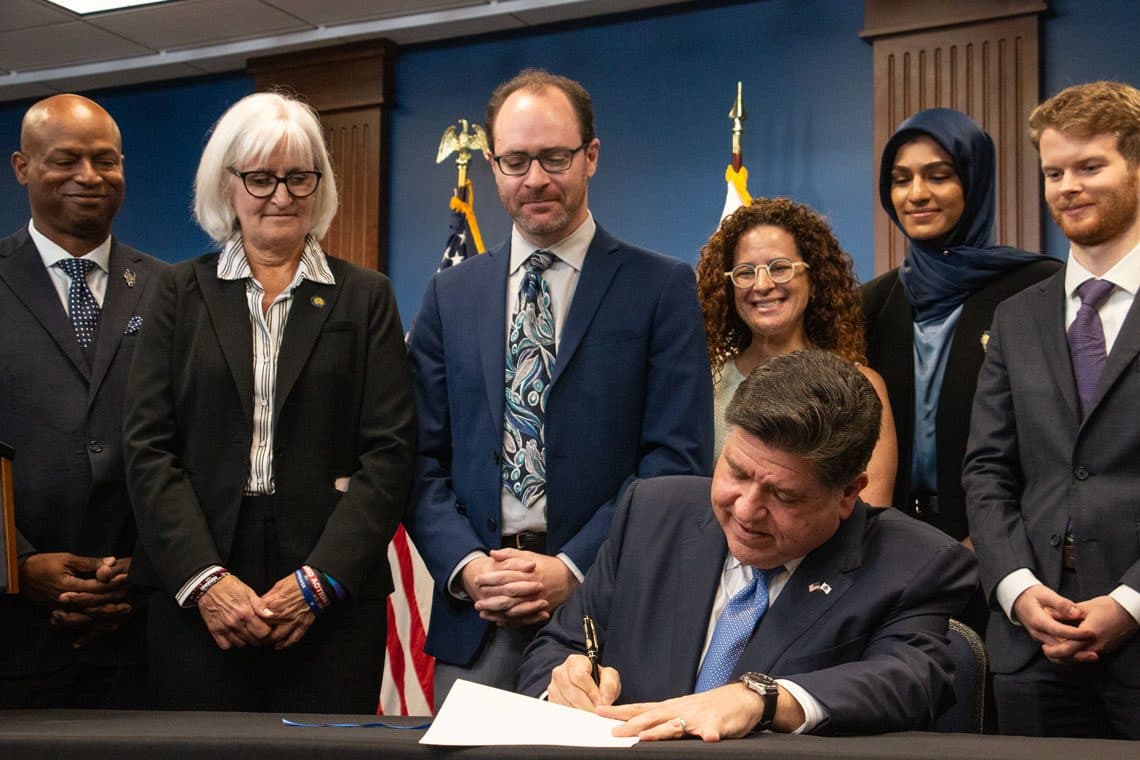
With federal AI legislation stalled, a state has moved first on frontier-model safety. Illinois Governor JB Pritzker signed the Artificial Intelligence Safety Measures Act — SB 315 — into law on July 6, 2026, the first US statute to mandate independent third-party safety audits of the largest AI models.
What it requires
The law compels covered developers to undergo annual independent third-party audits of their safety practices — a first in any state AI law — to publish and yearly update a plan for addressing catastrophic risks from their models, to report critical safety incidents, and to submit periodic summaries of internal-use risk assessments.
Who it covers
The obligations fall on "large frontier developers," defined as frontier developers with more than $500 million in annual gross revenue. That threshold aims the law squarely at the biggest labs — OpenAI, Google, Anthropic, Meta and Musk's SpaceXAI among them — while sparing startups and smaller developers.
Teeth and limits
SB 315 adds whistleblower protections and internal reporting channels for covered employees and establishes civil penalties for violations, while explicitly creating no private right of action. It takes effect January 1, 2027.
The federalism play
The move recalls California's fight over SB 1047 and reflects states stepping into a federal vacuum — backers call it the nation's most protective AI law. It also inverts Washington's approach: where the federal frontier-model framework is voluntary and its criteria classified, Illinois has written binding, auditable duties into statute. The open question is whether other states copy it, producing the 50-state patchwork industry fears, and whether a federal preemption push follows.