Google DeepMind published SL2T on 12 August — a sign-language translation model that has left the lab and shipped inside a phone. It runs in Gboard and Live Transcribe on the Pixel 11, letting a Deaf user sign to the camera instead of typing.
The training data problem
Sign-language AI has historically stalled on corpus size. SL2T was trained on more than 100,000 hours of signing video spanning 50+ sign languages, of which roughly 25% is American Sign Language. DeepMind reports a zero-shot score of 70 BLEURT on FLEURS-ASL, which it states is significantly above any previously published result.
How the privacy design works
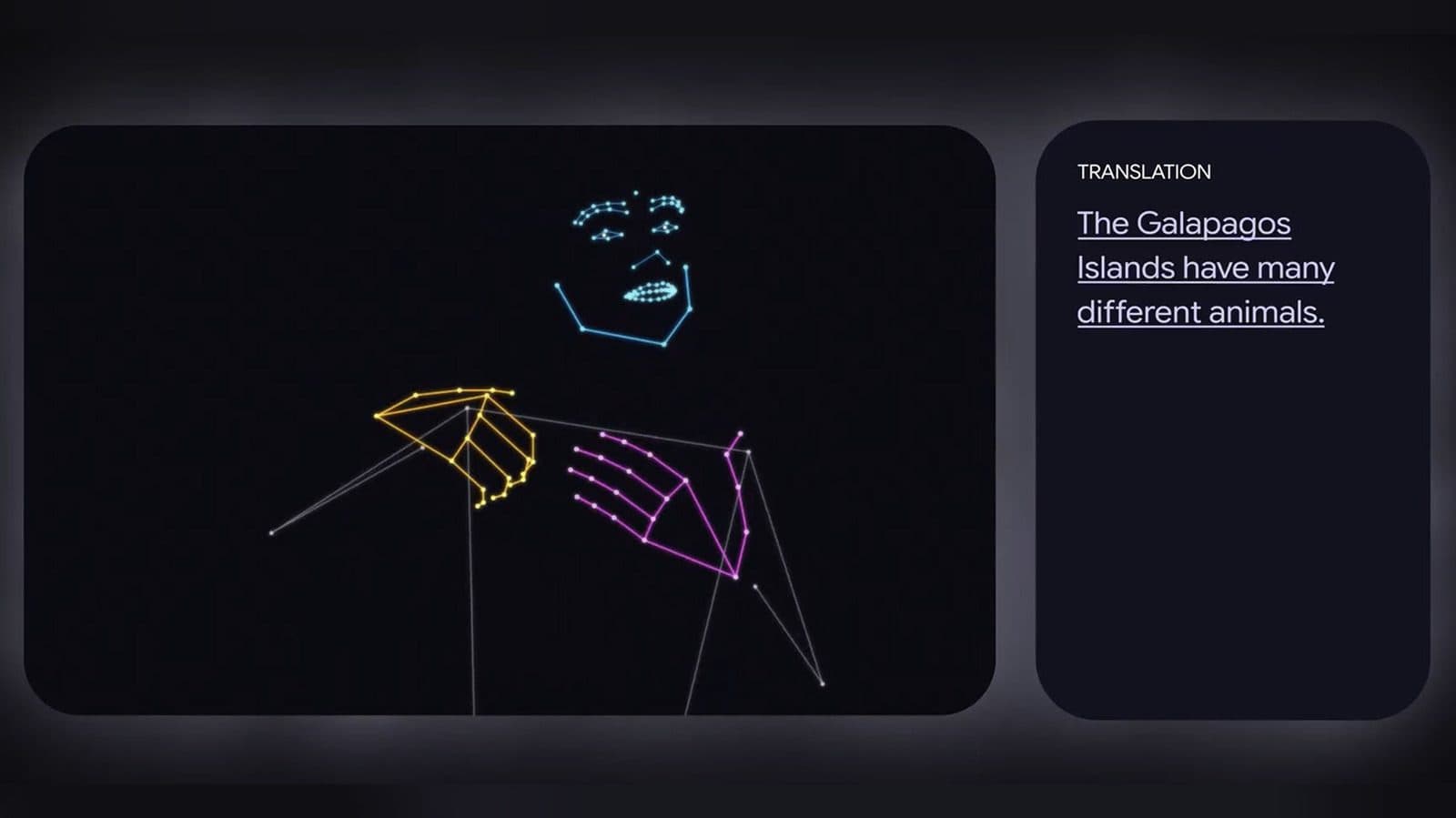
Pose extraction happens on the device using MediaPipe Holistic. Raw video is discarded; only geometric landmarks — joint positions, hand shape, facial points — are carried forward. For a system pointed at a camera in someone's home, that architectural choice matters more than any policy statement about it.
What actually shipped
The launch is ASL to English on the Pixel 11. More devices and language pairs are described as coming, without dates. Sign languages are not dialects of spoken ones — they have their own grammar, and ASL is not mutually intelligible with British Sign Language — so each pair is closer to a separate problem than a translation setting.
Where the benchmark stops
The 70 BLEURT figure is company-reported with no independent evaluation. FLEURS-ASL is also narrow relative to real signing, which carries regional variation and non-manual markers — grammatical information conveyed by eyebrows, mouth and head position that a landmark pipeline may capture unevenly.
Why this one counts
Accessibility AI has produced a long line of impressive demonstrations that never shipped. Putting the model in a default keyboard on a retail phone is the harder step, and it moves the question from whether the research works to whether Deaf users find it usable at the speed of ordinary conversation.